
[AFFILIATE DISCLOSURE] This guide may contain affiliate links. If you buy through them, StaysTidy may earn a commission at no extra cost to you. Read our Affiliate Disclosure.
Guests arrive in ninety minutes (or tomorrow, and you’re reading this at midnight — we’ve all been there). This is not a deep-clean guide and it will not make your home perfect. It is a triage system for the three rooms guests actually judge a home by — entryway, bathroom, kitchen — in the order they’ll encounter them, with a hard stop at 90 minutes. The principle: guests notice surfaces, smells and whether they can find the loo roll, in that order. Everything below serves one of those three.
Set a timer. Triage rewards finishing; perfectionism is how you end up alphabetizing spices when the doorbell rings.
This is the fast, seasonal version of our Declutter & Keep-It-Tidy Routines: those systems get built once; this is what you run when guests are on their way.
The honest limits of triage
Triage hides mess; it doesn’t resolve it. Tonight that’s fine — hospitality is a legitimate goal and nobody’s character is measured by a laundry basket in a closed bedroom. But if every visit requires the 90-minute rescue, the rescue is telling you the daily systems underneath are broken, and the morning-after verdict session (below) keeps pointing at the same room. Listen to it. Two or three rescues with the same culprit room means that room needs its actual system fixed — a drop zone, a bathroom zone, a paper tray — which is a Saturday project, not a doorbell project.
Minutes 0–10: The staging pass (whole home, fast)
Walk your fastest nightly reset loop with a basket and a bin bag:
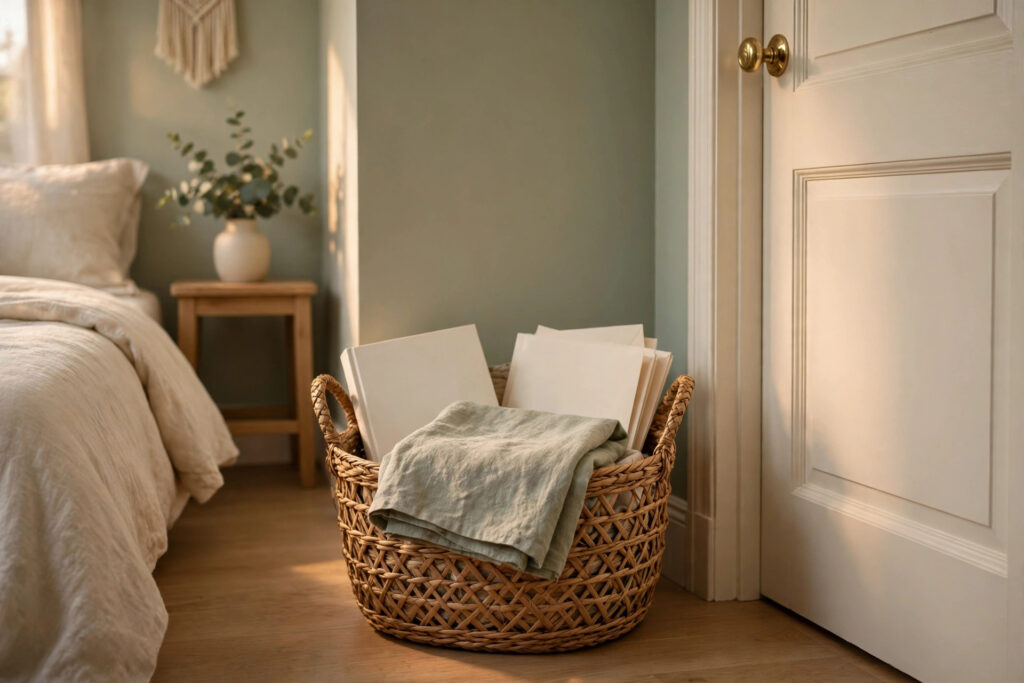
- Basket: everything homeless in the living areas goes in. The basket then goes in a closed room (yours). This is not cheating; this is triage. The basket gets verdicts tomorrow, not tonight.
- Bin bag: visible rubbish, recycling backlog, the entryway’s paper drift (judge it fast with the paper verdicts — recycle in seconds, act/file anything official-looking, nothing gets “decided” now beyond the tray).
- Close every door that can hide a room. Guests do not need the full tour.
Minutes 10–35: Entryway (the first impression)
Run the drop zone at emergency standard:
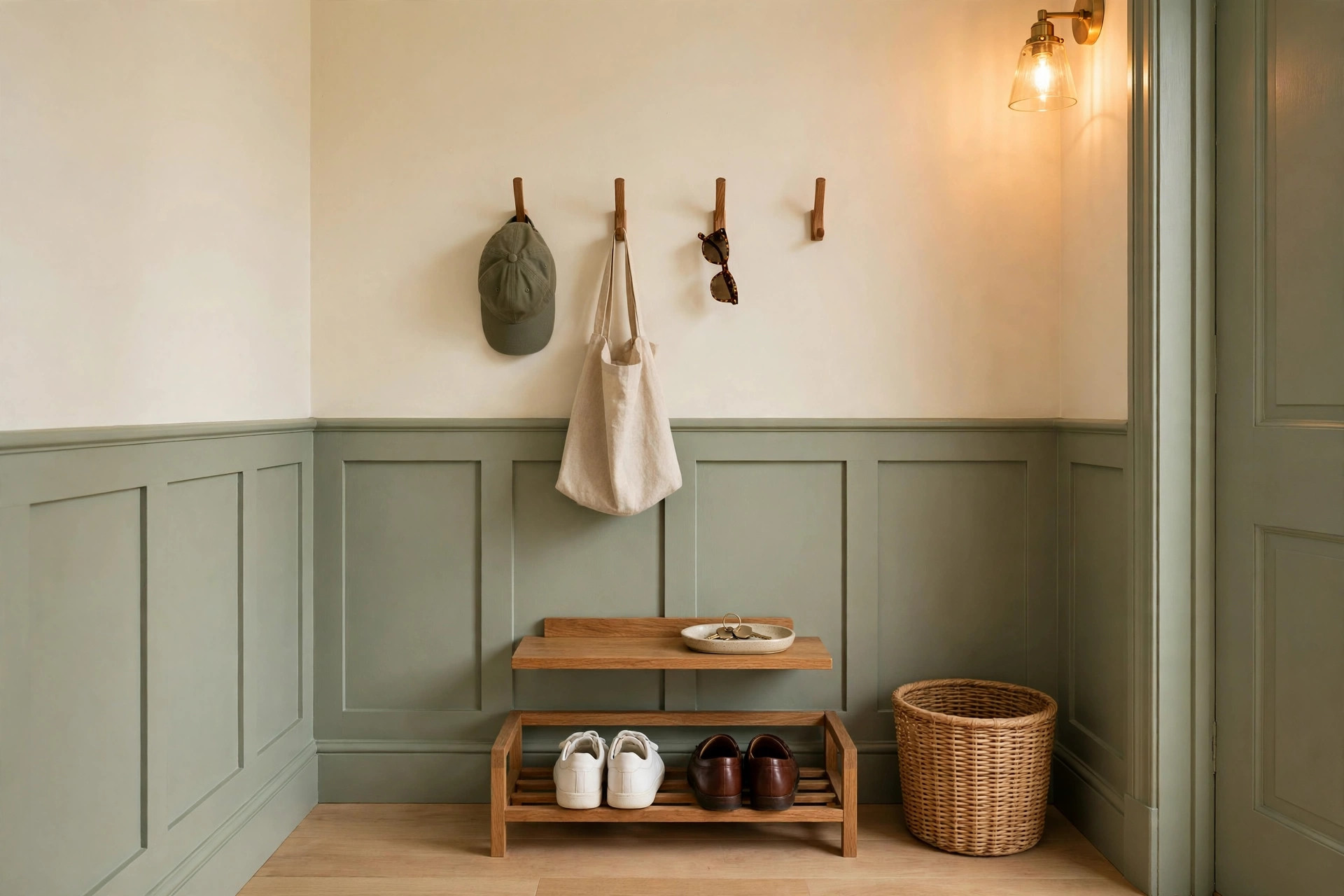
- Guest capacity created: clear one hook and space for 2–3 pairs of guest shoes before they arrive (your own overflow moves to bedrooms, not a neater pile here). This is the flex-space principle — an entryway with nowhere for guests to land makes the first minute awkward.
- Floor fully clear in the walk path; boot tray emptied or wiped if wet weather is doing its work.
- One surface, empty: wherever guests will put keys/glasses, give them a clear tray-sized spot.
- Smell check at nose height by the door — bins emptied, shoe area aired. If you use a scent, one, subtle, started now (not sprayed as they knock).
- Light check: entry bulb working, path lit. Dim hallways feel cluttered even when they’re empty.
Minutes 35–60: Bathroom (the room guests inspect alone)
Guests will study this room unsupervised. In priority order:
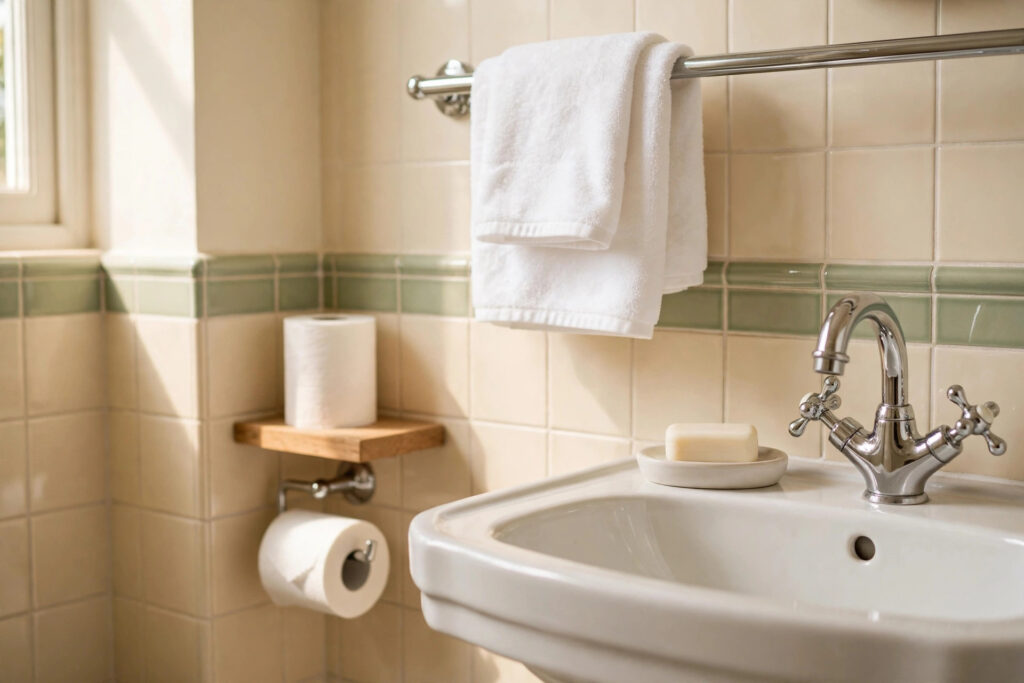
- The three supplies, visible and stocked: hand towel (clean, dry — swap it even if it looks fine), soap present and usable, toilet roll current roll healthy plus a spare in sight. A guest hunting for a spare roll is a hosting failure no décor survives.
- Surfaces to near-empty: daily products into their basket or the over-toilet/stock zones — guests need counter space for their own things and read clear surfaces as cleanliness.
- Bin emptied, with a liner. Non-negotiable, two minutes, enormous effect.
- Mirror and taps: a 60-second wipe of both. These two surfaces carry the whole room’s “clean” signal.
- Guest towel placement separate from family towels (fresh ones from the linen rotation), and anything personal you’d rather keep private moves to your bedroom — triage basket rules apply.
Minutes 60–85: Kitchen (where everyone ends up)
- Counters to working-empty: everything non-essential into cupboards or the closed-room basket. Guests congregate where the host is; clear counters make helping possible and mess invisible.
- Sink empty and wiped; dishwasher run or emptied so dirty glasses have somewhere to go during the visit — a sink that fills by hour one becomes the party’s centrepiece.
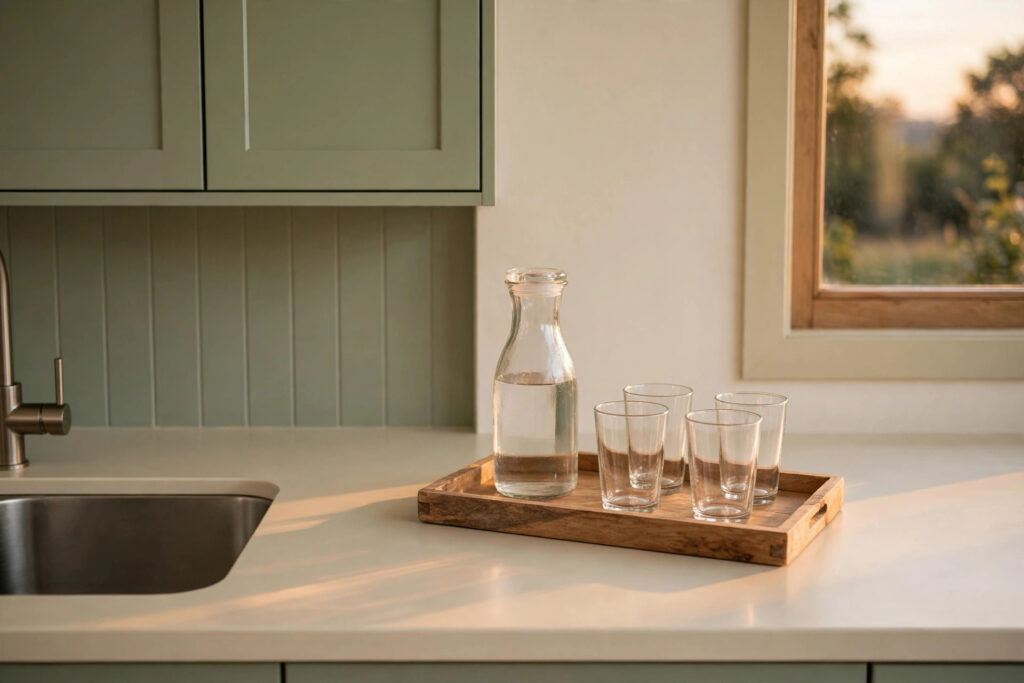
- The hosting station: drinks, glasses, one tray. Set it up now so you’re not opening every cabinet in front of guests later. Fridge: a fast expiry sweep of anything that will be seen when the door opens, leftovers in closed containers.
- Floor spot-check where people will stand (in front of the sink and hob): a quick sweep beats a full mop you don’t have time for.
- Bin + recycling emptied and relined — hosting manufactures packaging at industrial rates; starting empty buys you the whole evening.
Minutes 85–90: The guest-eye pass
Walk in your own front door as if for the first time. Entry: can I land? Living path: surfaces calm? Bathroom: supplies findable in ten seconds? Kitchen: where would I put my glass down? Fix the single worst answer, then stop. Put the kettle on. You are done — stopping is part of the system, because a host who is still scrubbing at the doorbell hosts from the kitchen doorway.
After the guests (tomorrow, 15 minutes)
The basket of exiled clutter gets its verdicts (home / out-box / bin) — do not let triage baskets become permanent storage; that’s failure mode 6 wearing a party hat (see why systems fall apart). If this rescue keeps happening in the same season, it’s time for the deeper version: the seasonal home reset checklist fixes the rooms the rescue keeps visiting. Guest towel to wash, supplies restocked to the bathroom’s normal state, and note what ran out — next time’s reset starts from that list.
What to skip (even though it itches)
- Deep cleaning anything. Ovens, skirting boards, inside cupboards: invisible to guests, ruinous to your timeline.
- Reorganizing. Tonight is staging, not systems. Any “while I’m here” reorganization steals minutes from the three rooms.
- Buying anything new today except missing supplies (rolls, soap, bin liners). Decor purchases made in panic are next month’s clutter.
Keep it tidy (so next time is 45 minutes)
Households that run the 10-minute nightly reset and maintain their drop zone start this guide at minute 35. The 90-minute version is the rescue; the daily habits are the prevention. After two or three hosted evenings, most homes find their real number is under an hour — write yours down and keep it with the printable.
FAQ
Guests are staying overnight, not just visiting. What changes?
Add 15 minutes: guest bed made with the spare set from the linen rotation, one drawer or basket emptied for their things, bathroom gets a second spare roll and a small “yours” basket for their toiletries. Everything above still applies first.
I have 30 minutes, not 90. Absolute minimum?
Minutes 0–10 staging pass, bathroom supplies + bin (10 min), entry floor + one hook (5 min), kitchen counters + sink (5 min). The doorbell protocol: smile, and remember guests came to see you.
Kids’ stuff is everywhere. Where does it go in triage?
One basket per room into the closed room, toys included. Tomorrow’s verdict session is where it gets homes (kids’ systems if mornings are the real issue). Tonight, floors and surfaces win.
What about pets and their evidence?
Litter/feeding zones get the bathroom treatment (clean, contained, smell-checked), pet beds out of the entry path, and pet items into one basket. Guests who know you have pets expect a home that has pets — they judge smells and floors, not existence.