
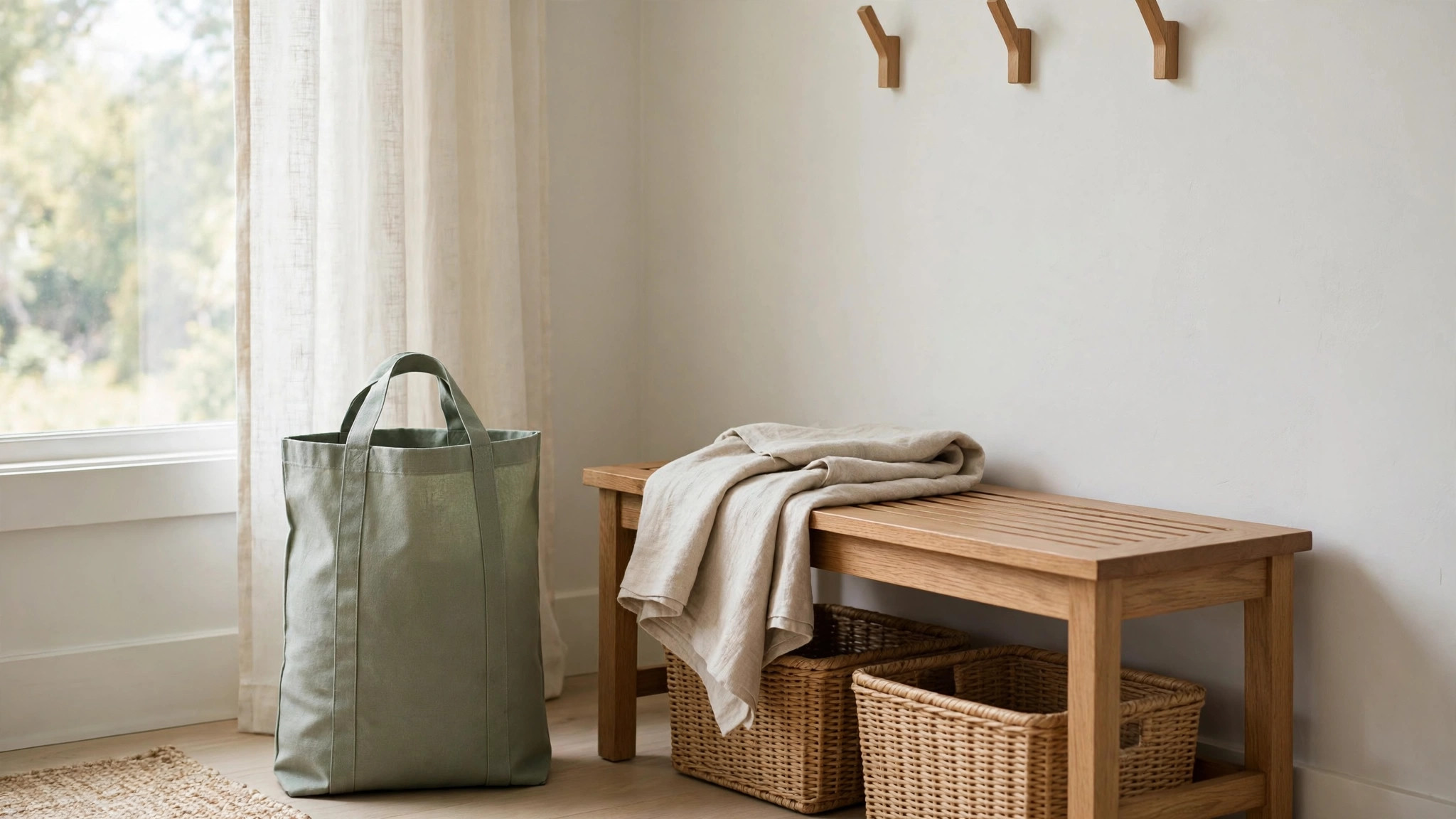
The one in one out rule is the tidiest-sounding rule in organizing. Then real life arrives: the new shampoo bottle, the birthday presents, the jumper that was on sale. Within a week you’re “one-inning” a half-used bottle of conditioner and feeling ridiculous, and the rule quietly dies.
The rule isn’t wrong. It’s undefined. Nobody tells you what counts as “in,” what “out” actually requires, or what to do about gifts, groceries and growing children. Here’s the precise version that survives contact with a real household — the rule, the exceptions, and the room-by-room way to run it.
What is the one in one out rule?
Strip away the slogan and it’s this: every new durable item that enters your home displaces one item in the same category, and the outgoing item leaves the house within a week. Three details do all the work:
- Same category. A new shirt displaces a shirt, not a mug. Cross-category trading is how the rule becomes meaningless.
- Decided at purchase, not “someday.” The outgoing item is chosen before you buy — or at the door when the parcel arrives. Deferred decisions are where the rule goes to die.
- Leaves the house within a week. Not into a bag by the door. Out — donated, sold, binned, given away.
Run it this way and the one in one out rule stops being a decluttering trick and becomes what it’s meant to be: a maintenance system. It converts buying from automatic to deliberate, because every purchase now carries a small, honest tax — something you already own has to go.
Why the slogan version fails
Most versions of the one in one out rule fail for the same reason most organizing systems fail: the logistics are missing. We wrote about this in why organized spaces fall apart in two weeks — it’s never the idea, it’s the undefined edges. With one-in-one-out, the edges are everything. Apply it to shampoo and you’ll burn out by Thursday. Apply it with no plan for where the “out” items go and you’ll build a donation pile by the front door that becomes furniture.
The exceptions that make the one in one out rule work
This is the part the slogan leaves out. A rule with no exceptions gets abandoned at the first gift-giving holiday. Here are the ones that keep it livable:
Consumables and replenishables are exempt. Shampoo, batteries, pantry staples, bin bags, printer paper — items meant to be used up don’t trigger the rule. The trigger is durable goods: things that sit in your home for months or years.
An upgrade is the rule working, not cheating. New pan in, warped pan out. That’s one-in-one-out doing exactly its job. Don’t count replacements as violations — they’re the cleanest version of the system.
Gifts get a quarterly review, not the rule. You can’t control inflow at birthdays and holidays, and trying to makes you miserable. Instead: gifts enter freely, and once a season you run one honest pass over gift-heavy categories (mugs, candles, toys) and let the duplicates go.
Seasonal items run on rotation, not the rule. Off-season clothes follow the capsule wardrobe rotation — two containers, twice a year — not a per-purchase swap.
Some doubles are intentional. A phone charger in the bedroom and one in the living room isn’t clutter; it’s a decision. If a duplicate earns its place, write down the limit (two chargers, not five) and the rule only polices beyond it.
Kids’ growth has the “out” built in. Outgrown clothes and toys leave automatically — the work is the pass, not the decision. Run a size-check every few months and the outflow happens on its own.
Hobbies get a container, not a count. Craft supplies, tools, sports kit: define the box or shelf they live in. New item fits in the container? Fine. Doesn’t fit? Something leaves. The container is the rule.
One in one out rule, room by room: the category pairs
The one in one out rule only works when the categories are concrete. Here are the pairs that matter, room by room:
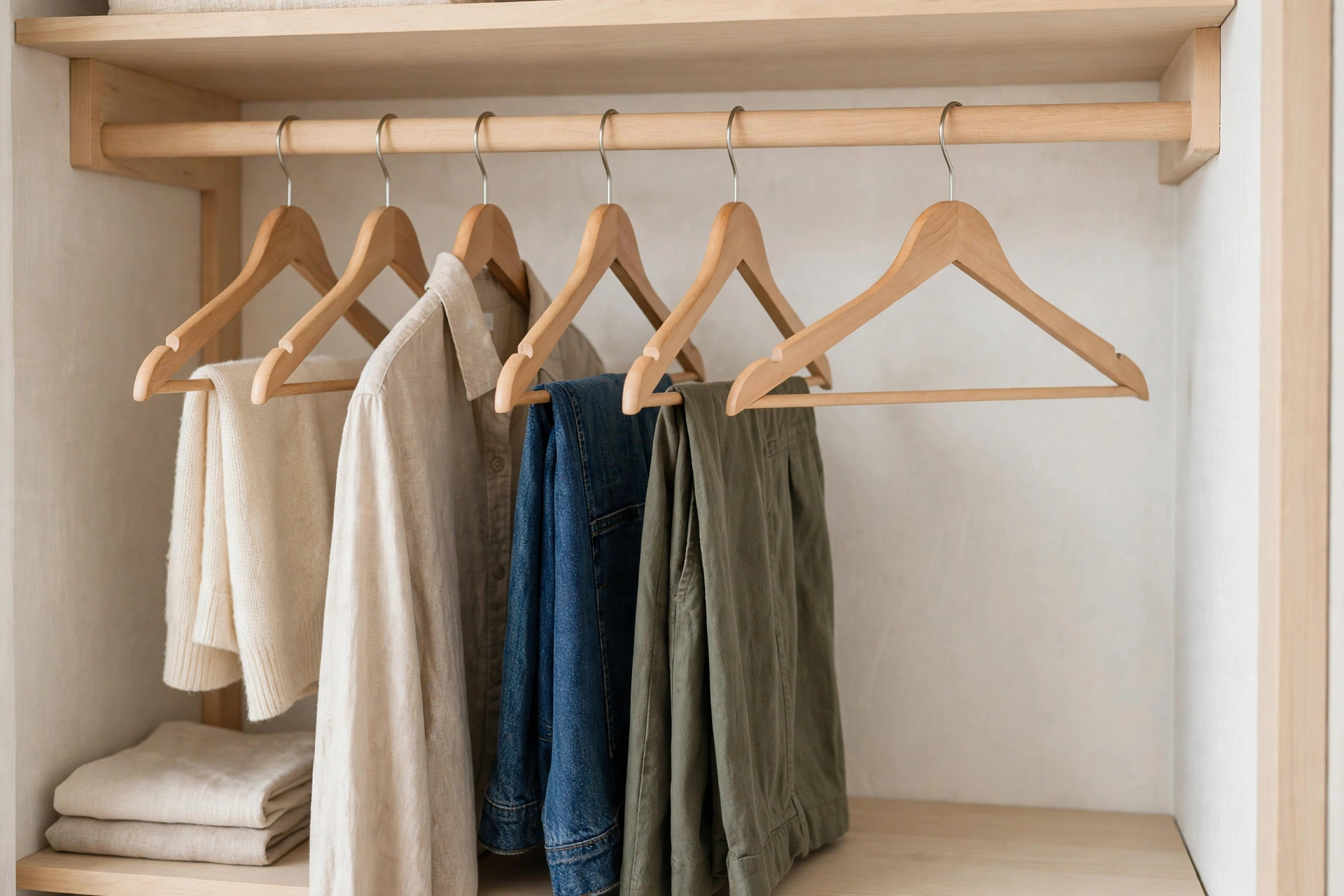
Closet — new top in, one top out. Use the rail test from our capsule wardrobe system: if hangers can’t slide, the rail is full and something must go before anything new stays. Shoes: one pair in, the pair you stopped wearing out. Bags: cap the shelf — new bag only when the shelf has a gap.
Kitchen — one gadget in, the single-use gadget out. The utensil drawer is the canary: if it won’t close, the last thing you bought is the signal, not the problem. New storage container in, the lidless one out. Small appliances get a counter limit — two out, one in only.
Bathroom — the shelf-edge rule. If products are double-parked behind each other, something leaves before anything new arrives. Half-used duplicates merge or go. Samples and hotel minis: cap at a small tray; the tray is full, the rule fires.
Living room — cap the soft things. Throws and cushions multiply silently. Pick the number (three throws, six cushions — whatever fits your storage) and new ones displace old ones. Remotes, cords and the daily pile follow the disappearing-storage logic from our living room storage guide — the rule keeps the count honest, the system keeps them hidden.
Kids’ room — choose the out before the party. Birthday inflow is the biggest category breach in any family home. The fix: before the birthday, child and parent pick the outgoing toys together. It teaches the trade, and the new toys have somewhere to live on day one.
Home office and paper — digitize or file, then the rule applies to the container. Paper is the sneakiest category because it doesn’t look like “stuff.” Run the paper pile sort first, then cap the filing tray: new papers in, the tray gets processed, not stacked.
The ‘out’ logistics nobody talks about
Here’s where the one in one out rule actually lives or dies: the outgoing item must leave the house within a week. A bag by the door for six weeks isn’t the system — it’s a new pile. Set up the out-flow once and the rule runs itself:
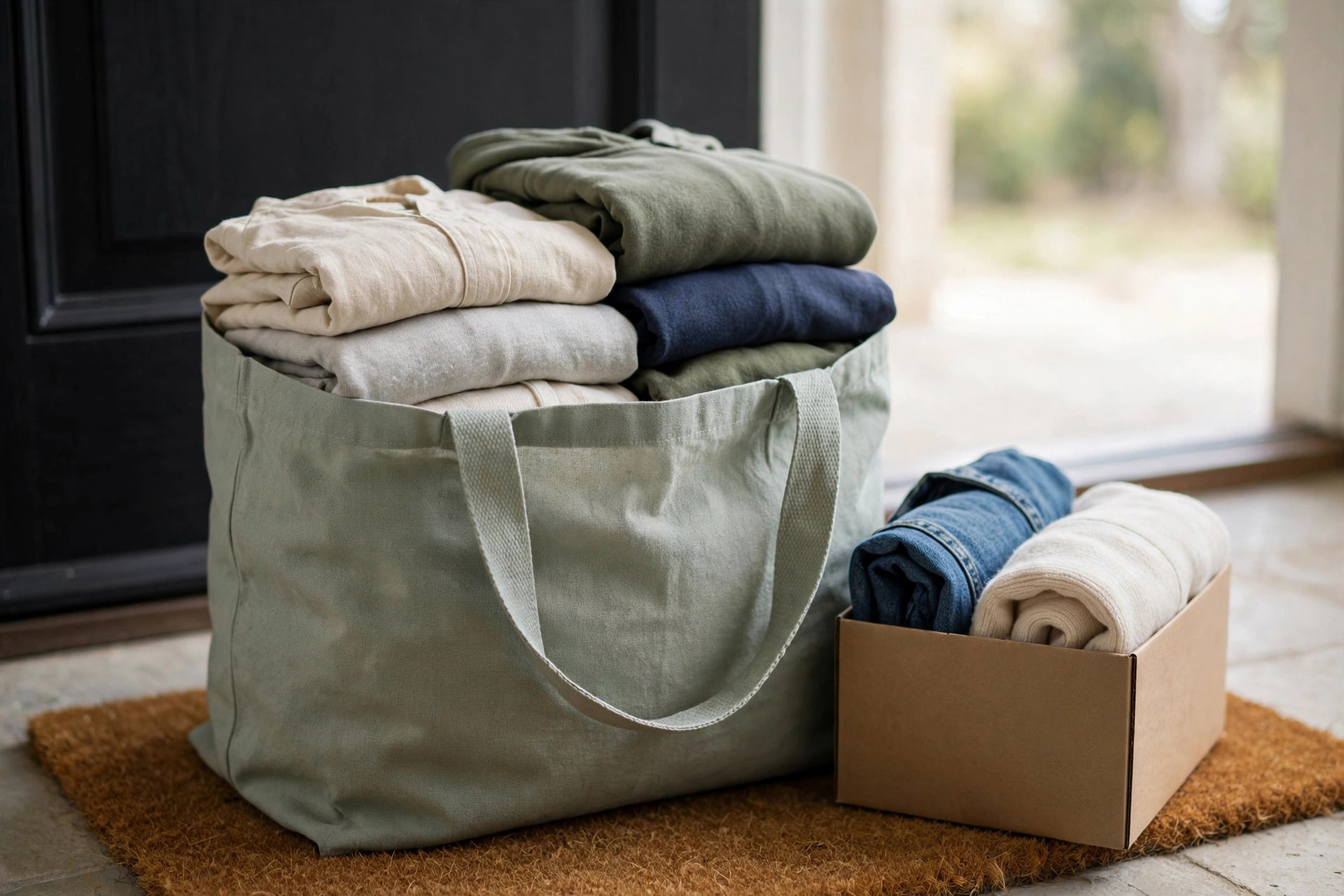
- One out-station. A single bag or box near the door — not one per room, which multiplies into clutter. Everything outgoing lands there.
- The weekly sweep. Pair the drop-off with something you already do: the weekly shop, the school run, Saturday errands. The charity shop, the textile bin, the neighbour who wanted the lamp — one trip, everything gone.
- Triage at the station. Three fates: donate (good condition), sell (worth the listing effort — be honest, most things aren’t), bin or recycle (broken, stained, missing parts). Deciding at the station, once, beats deciding every time you pass the bag.
- The nightly assist. During the 10-minute nightly reset, anything marked “out” during the day goes to the station. The reset is the conveyor belt; the weekly trip is the truck.
Mistakes that break the one in one out rule
Applying it to consumables. The fastest way to hate the rule. Exempt the used-up stuff on day one.
No out destination. The rule without a weekly drop-off is a bag by the door. Set the station and the trip before you start.
Starting with the whole house. Pick one category — your closet, or the kitchen drawer — and run the rule there for a month. Whole-house starts collapse by week two.
The ambush. Springing the rule on a partner or kids guarantees resistance. Agree the categories and the exceptions together first. People keep rules they helped write.
Counting the upgrade as a cheat. Replacing the broken thing with a better thing is the system working. Let it.
When to pause (and how to restart)
Moving house, a new baby, illness, December — there are seasons when inflow is chaos and the one in one out rule would just add guilt. Pause it. The restart is one category, one week, the out-station emptied first. A paused rule you restart beats a perfect rule you abandoned.
The one in one out rule setup checklist
- ☐ Categories defined (closet tops, kitchen gadgets, bathroom shelf, living-room soft things, kids’ toys, paper tray)
- ☐ Exceptions agreed (consumables exempt, gifts quarterly, upgrades count as the rule working)
- ☐ Outgoing item chosen at purchase — before buying, not after
- ☐ One out-station by the door (single bag or box)
- ☐ Weekly drop-off paired with an existing errand
- ☐ Nightly reset moves “out” items to the station
- ☐ Start with ONE category for the first month
Run the one in one out rule this way and the house stops slowly filling. Not because you decluttered once, but because every new thing now negotiates its place — and most things, faced with the tax, never come home at all.
One in one out rule FAQs
What is the one in one out rule?
Every new durable item that enters the home displaces one item in the same category, and the outgoing item leaves the house within a week.
Does the one in one out rule apply to clothes?
Yes. In the closet, a new top in means one top out, and new shoes displace the pair you stopped wearing. Off-season clothes are the exception: they run on a twice-yearly rotation, not a per-purchase swap.
What doesn’t count under the one in one out rule?
Consumables and replenishables (shampoo, batteries, pantry staples) are exempt because they are meant to be used up. Gifts get a quarterly review instead of the rule, and upgrades count as the rule working, not cheating.
How does the one in one out rule work for kids’ rooms?
Choose the outgoing toys before the party or birthday inflow arrives, so new toys have somewhere to live on day one. Outgrown clothes leave automatically with a regular size-check.
More one in one out rule reading:
How to Organize Small Spaces: A Room-by-Room System for Small & Rented Homes
One-One-Out Rule Could Solve Your Wardrobe Woes



5 thoughts on “The One-In, One-Out System, Room by Room — With the Exceptions That Make It Work”