
[AFFILIATE DISCLOSURE] This guide may contain affiliate links. If you buy through them, StaysTidy may earn a commission at no extra cost to you. Read our Affiliate Disclosure.
Organizing is an event; staying tidy is a habit. The gap between a home that was organized once and a home that stays organized is almost never more storage — it is a small daily closing routine, the same way shops close up at night. The nightly reset takes ten minutes once it is a habit, and it does three jobs: it returns everything to its home, it surfaces problems while they are still small, and it hands tomorrow-morning-you a home that starts at tidy instead of at “where is everything.”
This is not a cleaning routine. The dishes and the vacuuming live elsewhere. The reset is purely about placement — things returning to the homes your organizing systems already gave them. If something has no home, the reset is where you find out, and the basket rule below tells you what to do with it.
This routine is the daily engine of our Declutter & Keep-It-Tidy Routines: the systems get built once; this is what keeps them built.
The rules that make ten minutes enough
- Same time every night. Anchor it to something that already happens — after dinner, when the kitchen closes, when the last screen goes off. A reset that floats in the day is a reset that gets skipped.
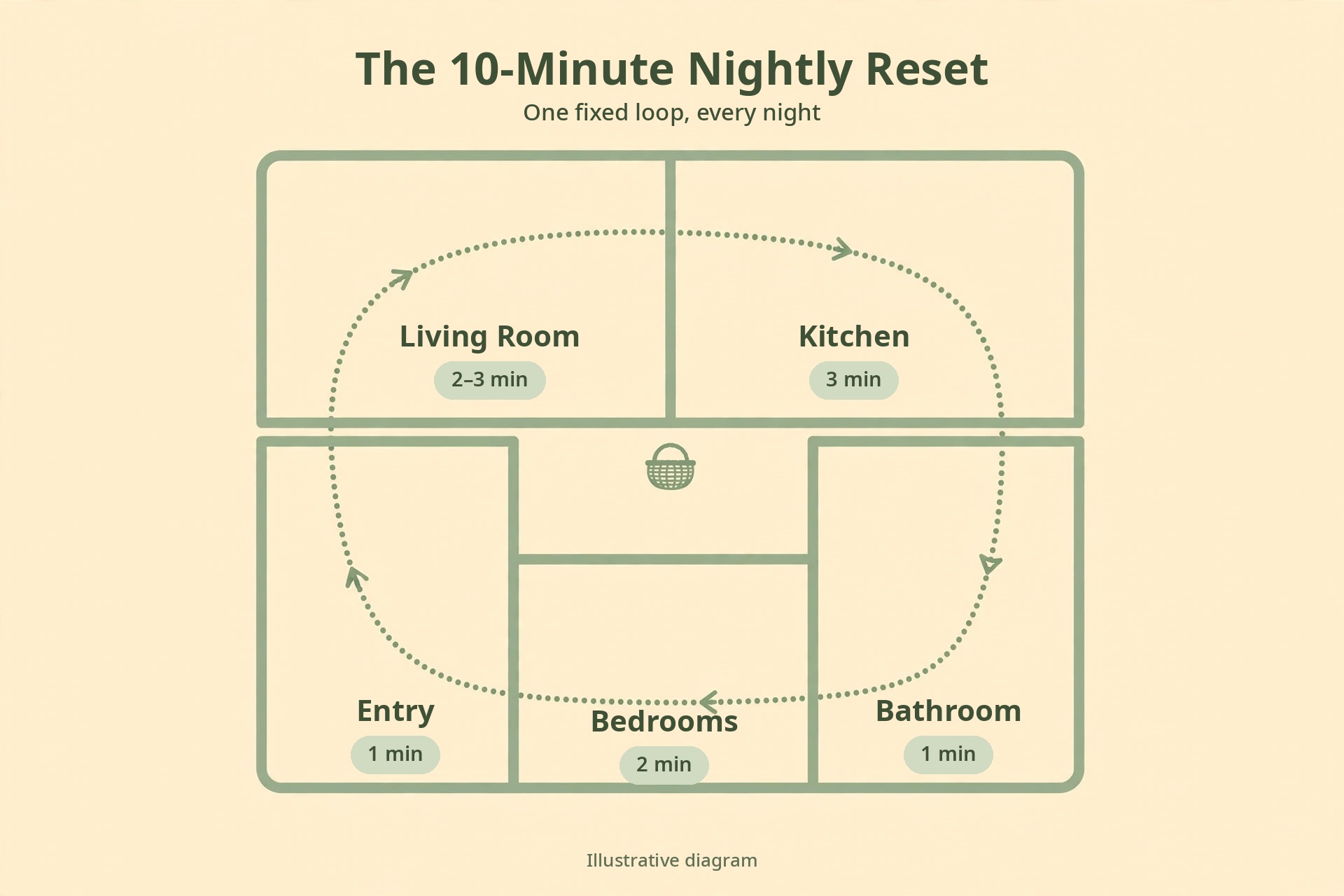
- Top to bottom, one direction. Walk the same loop through the home every night: entry, living room, kitchen, bathroom, bedrooms. A fixed route means you never re-decide what to do, and never skip a room.
- A basket in your hand. Carry one basket or tray. Everything that’s in the wrong room goes in the basket and is delivered as you walk the loop. This one tool turns a tidy-up into a single pass instead of a dozen trips.
- Timer on. Ten minutes is a container, not a target. When the timer ends, the reset ends — whatever is left is information about a system, not a reason to tidy for forty minutes and resent the routine by Friday.
The loop, room by room
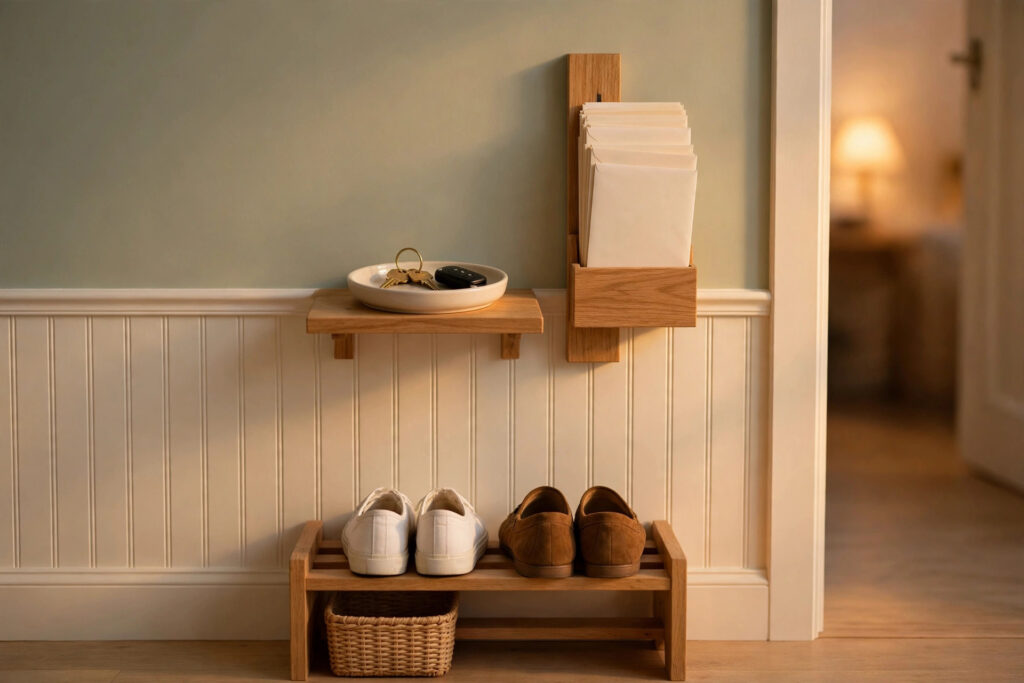
Entry (1 minute). Keys in the tray, shoes in the rack, post into the slot, one outgoing thing into the out-box. This is the drop zone’s 30-second reset extended by a glance: anything that doesn’t belong here goes in the basket.
Living room (2–3 minutes). Remotes to their home, blankets folded to their basket or the sofa’s end, mugs and glasses to the kitchen (in your hand, not the basket — breakables travel separately), cushions roughly upright. Surfaces cleared to “one tray’s worth” or less: the coffee table should be able to hold tomorrow’s coffee without a negotiation.
Kitchen (3 minutes). This is the room that decides whether the reset works. Counters back to empty-or-intentional: everything either in its zone or in the basket. Wipe the cooking tray if you use one (see our 7-zone pantry system), check what migrated into the “loose items” spots, and glance at back-stock before tomorrow’s shop. A kitchen that closes tidy makes mornings faster in a way that is genuinely disproportionate to three minutes.

Bathroom (1 minute). Products back into their container or over-door storage, towels hung, one thing binned if the bin is full. Thirty seconds of this is enough most nights — the bathroom reset is mostly noticing before a small drift becomes a project.
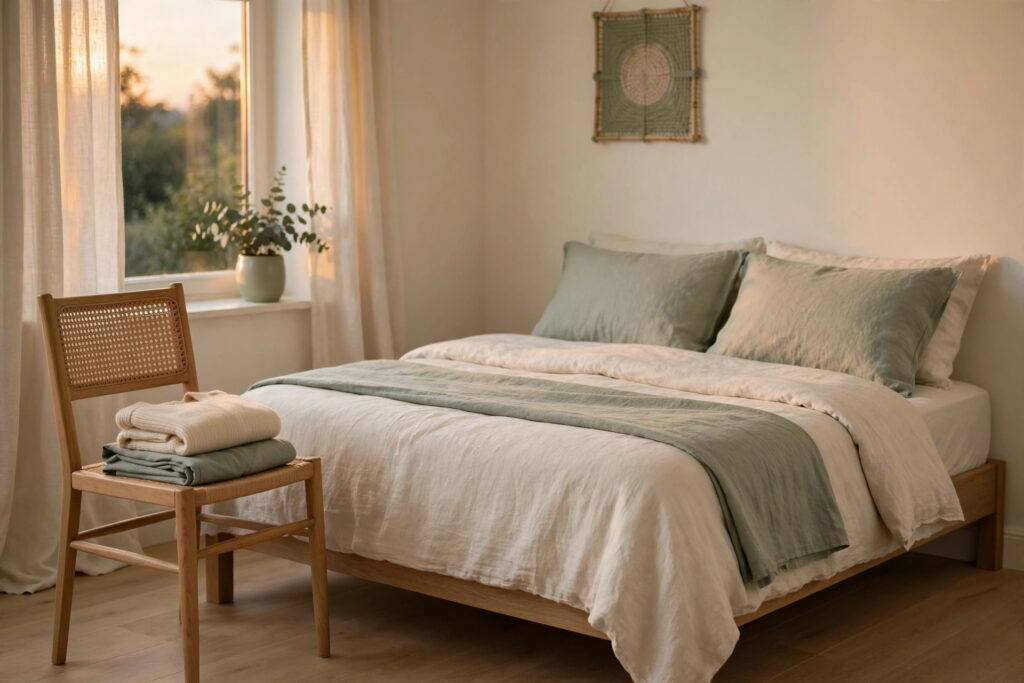
Bedrooms (2 minutes). Today’s clothes to the chair, the wash, or the wardrobe — three options, no fourth. Floor clear. Tomorrow’s outfit or bag staged if your mornings are rushed. Kids’ rooms: keep the standard age-honest — a young child’s reset is shoes and one toy category, and doing it with them for two minutes beats doing it perfectly after they’re asleep.
The basket rule (the heart of the system)
Whatever is still in the basket at the end of the loop is homeless or belongs to a system that isn’t working. It gets exactly three possible verdicts tonight: give it a home (and the home must be a real place, not “the drawer for now”), send it to the out-box to leave the house, or write it on the list — the running note, on paper or phone, of homeless things to solve at the weekend. What it never gets is a fourth night in the basket. A basket that stores things overnight has become the pile it was hired to destroy.
When the reset keeps failing
A reset that regularly needs twenty minutes is diagnostics, not laziness. The usual three findings:
- A zone is too small for its job (the post slot overflows by Wednesday). Shrink what enters it, sort it more often, or retire a category from the entry entirely.
- A storage spot is in the wrong place. If the same items are homeless every night, their “home” is somewhere your body refuses to go at 9 p.m. Move the home, not the habit — our tiny entryway guide is built on exactly this.
- There’s no home at all. New category of stuff entered the house (a hobby, a school year, a pet) and nobody gave it a container. The weekend list exists for this.
And if your whole system “fell apart” rather than drifting, that is a different problem with its own repair plan.
Keep it realistic
Miss a night? The system survives — do two minutes on the kitchen only, the room with the highest drift rate. Miss a week (illness, travel, life)? Do not “catch up” in a guilt marathon; run the ordinary ten minutes for three nights and the loop re-tightens on its own. The reset is a rhythm, not a debt.
FAQ
Ten minutes seems too short. Is this real?
For placement-only work in a home whose systems already exist, yes — once the route is habit, most nights run 7–12 minutes (the routine’s honest estimate, not a promise). If you are regularly at 25+, a system (not your effort) is the problem; see the diagnostics above.
What about deep cleaning?
Separate routine, separate schedule. Mixing cleaning into the reset makes the reset feel endless and makes cleaning rushed. The reset’s only hygiene job is noticing — a full bin, an empty soap dispenser — and noting it.
How do I get a partner or housemates to do it?
Walk the loop together for the first week, each with a basket, and let each person own the rooms they care most about. Ten visible minutes is an easy sell; “keep the house tidy” never was. For kids, the standard is small and specific, and it is done with them, not inspected after.
Should the reset include prep for tomorrow?
Lightly: outfit staged, bag by the door, one glance at the calendar’s first demand. The moment prep becomes a second job, the reset dies — keep it under two of the ten minutes.
Get the printable
10-Minute Nightly Reset Checklist One page, sized for the fridge door: the room-by-room loop with checkboxes and the basket-rule verdicts.
Download the free checklist (PDF) — free, no account needed.



4 thoughts on “The 10-Minute Nightly Reset That Keeps an Organized Home Tidy”