
[AFFILIATE DISCLOSURE] This guide may contain affiliate links. If you buy through them, StaysTidy may earn a commission at no extra cost to you. Read our Affiliate Disclosure.
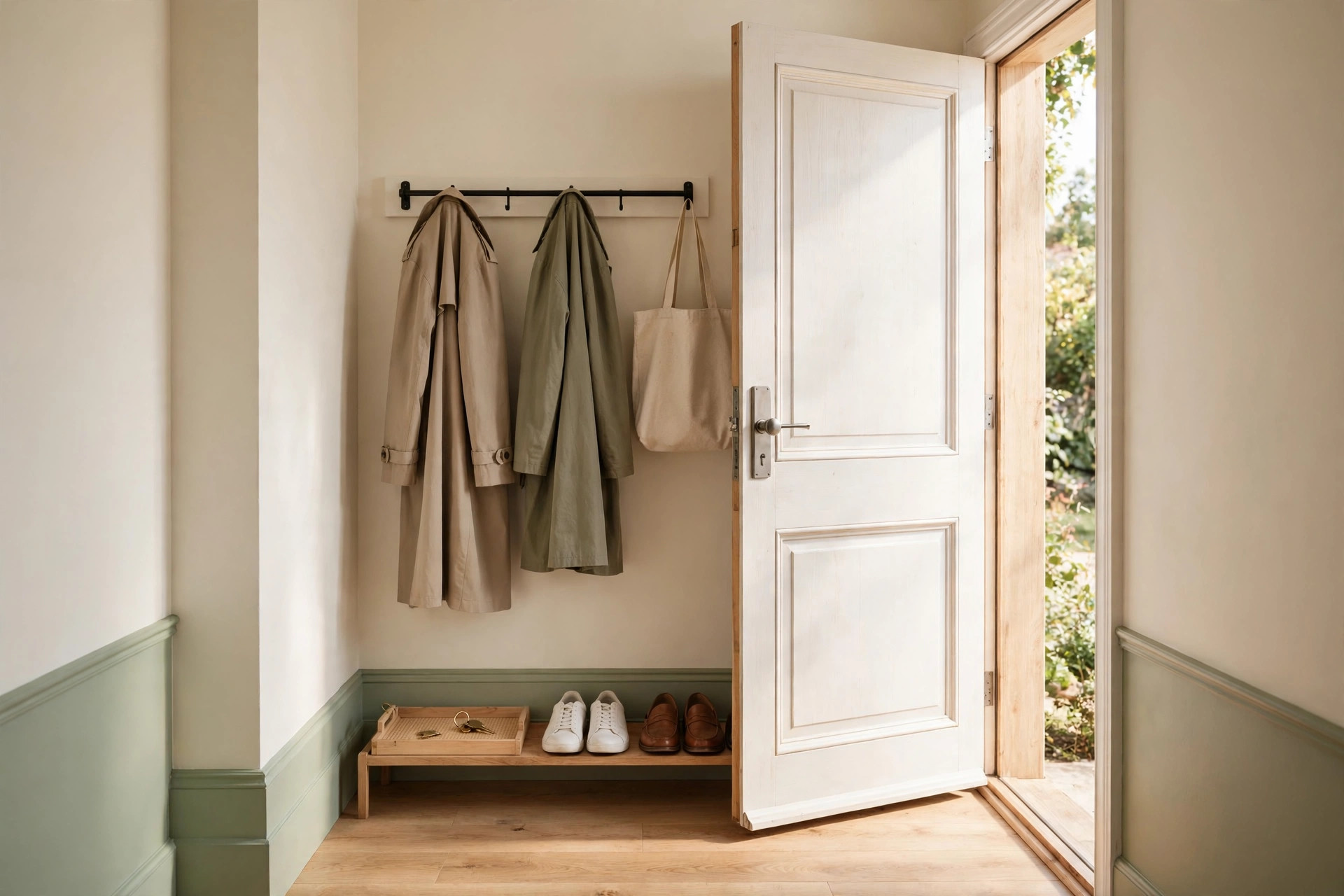
No entry closet, no hall — just a door that opens into your living room and a daily pile forming beside it. This is the most common “entryway” in small flats and older homes, and it does not need furniture. It needs the square metre you already have: the wall behind the door, the strip beside it, and the floor you walk across in your first three steps. These eight ideas use only that space — all freestanding, hanging or tray-based, so renters keep their deposit and owners keep their options.
Set the whole thing up around one principle from our entryway drop zone system: everything you carry in gets one home within three steps, and every container has a hard limit so the pile cannot quietly rebuild itself.
For the full category view, start with Entryway, Living & Bath: First Steps, Calm Rooms.
First, claim the space (10 minutes)
- Behind the door: open the door fully and look at the wall it hides. That strip — often 24–36 inches (60–90 cm) wide — is your storage wall. Measure its width and note how flat the door sits against it (hinged doors usually leave 4–6 inches / 10–15 cm of usable depth).
- The dead corner: the corner beside the door frame that furniture never fits. Measure it both ways.
- Floor path: nothing may live in the walk-through path. Your storage lives on walls, behind the door, or hard against them.
- Door type: hinged doors can carry over-door storage; if the entry door is a fire door or has a closer, check it still closes completely with anything mounted (test with a light item first — a door that doesn’t latch is a safety problem, not storage).
The 8 ideas
1. Over-door hook rail on the entry door or a nearby door
Five hooks on the back of the door carry today’s coats and bags invisibly. Keep it to daily-use items only — over-door storage becomes a wardrobe landslide one “just in case” coat at a time.
2. A slim shoe cabinet or low rack in the dead corner
The narrowest shoe racks are around 6–8 inches (15–20 cm) deep and live happily against the wall beside the door. Capacity rule: two pairs per person at the door, the rest in the bedroom.
3. Wall file or magazine holder as the post slot
One vertical holder beside the door at hand height: post in, sorted when full. Mount with removable strips on smooth paint or stand it on the shoe rack. A post slot with a hard capacity is the difference between “sorted weekly” and “archaeology.”
4. One tray on any surface you already own
No console table? The tray can live on top of the shoe rack, a crate, or a wall shelf you already have. Keys and wallet land here — the tray’s edges make “put it back” automatic.
5. A bench or sturdy crate you can sit on
Putting shoes on while standing in a doorway is how people end up sitting on the floor pile. A small bench or a lidded crate at sitting height gives you a seat, a surface, and (in the crate) hidden storage for hats and gloves in one footprint.
6. Hooks at two heights
One row at adult height, one at child height — on the wall behind the door if hooks can go there, or on the over-door rail’s lower hooks. Kids use storage that fits their arms. (Renters: removable strips, light loads, and check removal instructions — paint is deposit money.)
7. A boot tray that defines the wet zone
In rain and snow, a lipped tray under the shoe rack catches everything and quietly teaches the household where shoes belong. It also protects rental floors — a deposit-friendly bonus.

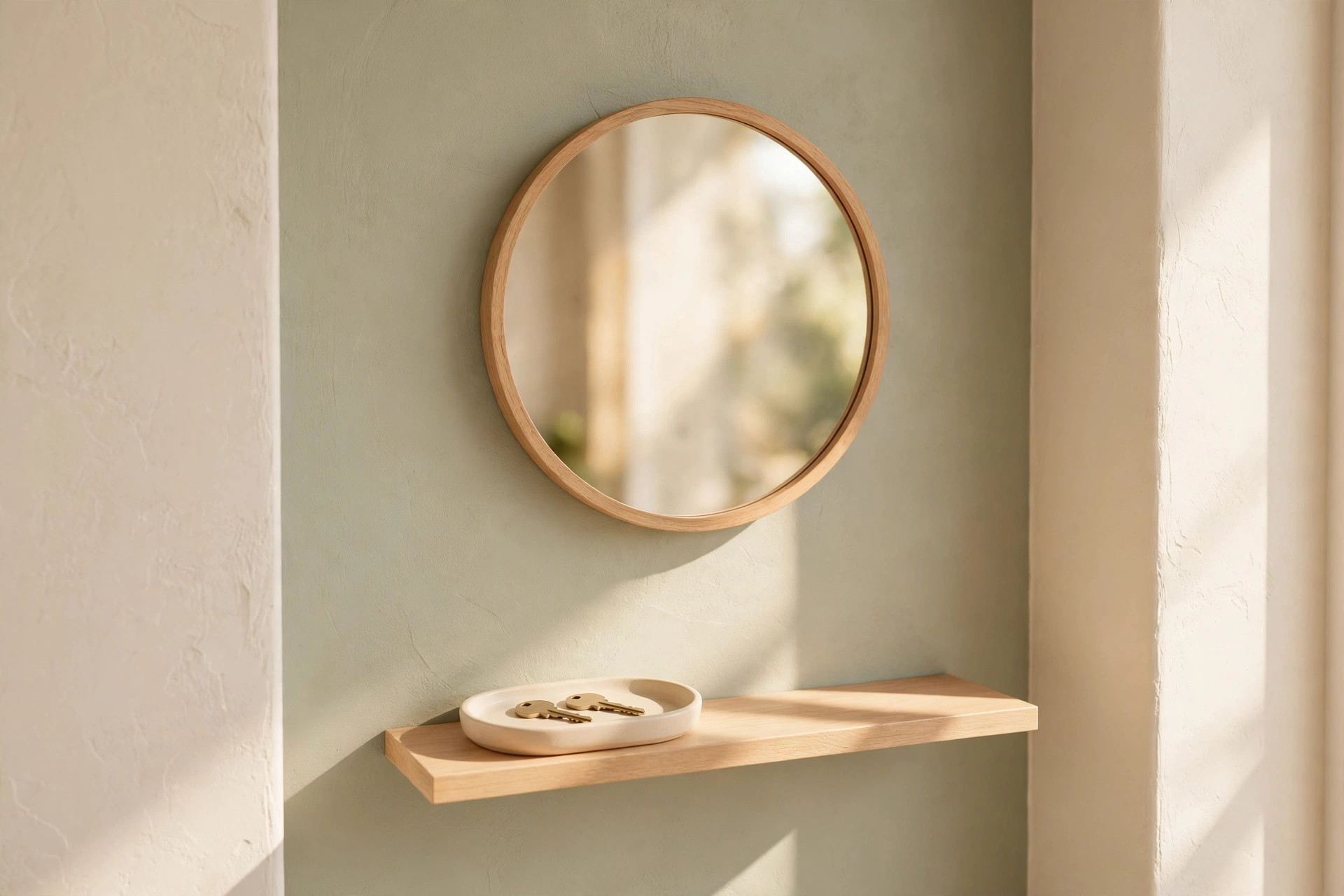
8. A mirror with a shelf (one piece, three jobs)
A mirror on the behind-door wall or beside the door makes a tiny entry feel finished, and a shelf under it becomes the key tray’s home. It is the one idea here that is pure morale — and morale is what makes you maintain the other seven.
Two worked layouts (steal these)
The behind-door layout (about 30 inches / 75 cm of wall): over-door hooks for two coats and a bag; slim shoe rack on the floor under them; post slot on the rack’s top surface beside the key tray. Footprint: zero beyond the door’s own swing.
The dead-corner layout (about 24 × 24 inches / 60 × 60 cm): lidded crate as seat and glove storage, boot tray with two pairs in front of it, wall file for post on the wall above at hand height, one low hook per child on the side wall. Everything within one step of the door, nothing in the walk path.
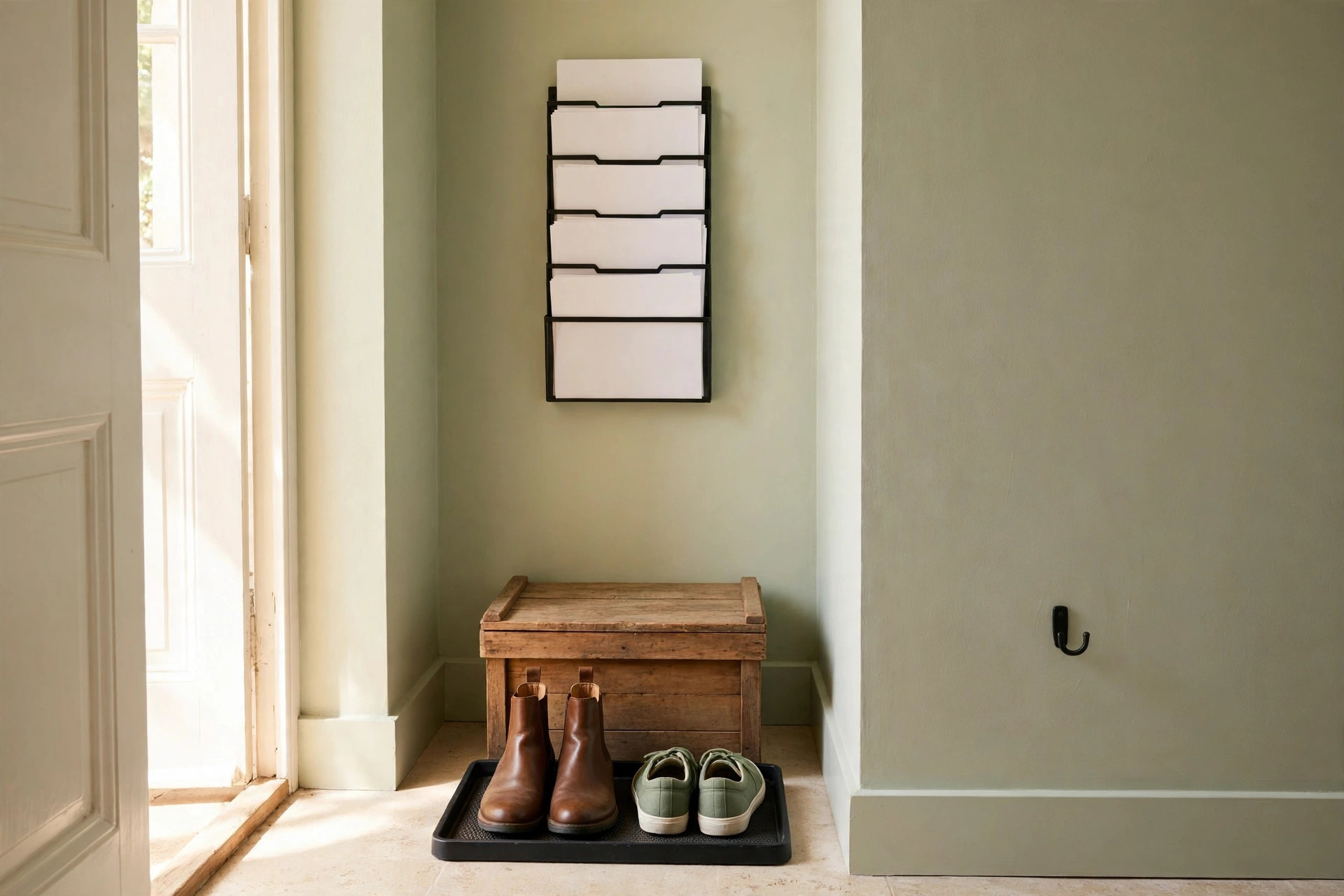
Measure your corner before copying either — corner sizes are the most variable thing in small flats, and both layouts assume the door itself opens clear of the storage wall.
Putting it together in one afternoon
Order matters more than shopping: shoe storage first (biggest footprint), hooks second, tray and post slot third at the heights your hands naturally reach, wet tray underneath last. Then live-test: come in with your full daily load and put everything down. Anything that lands outside a container is information — move a container there or give that item a home elsewhere in the flat.
What to skip
- A full-size coat stand in a tiny entry. It eats the walk path and becomes the pile with a pole in it. Over-door hooks hold the same coats flat.
- Storing off-season items here. The entry is prime real estate priced by the day. Boots in July live anywhere else.
- “Temporary” floor baskets. In a no-closet entry, floor baskets become permanent open piles. If it is on the floor, it needs a lid, a tray or a rack.
Keep it tidy
A 30-second nightly pass (keys in tray, shoes on rack, one item to the out-box) plus a weekly post-slot sort. The whole zone is small enough that tidy is the default — if it stops being tidy, something has outgrown its container and needs a decision, not a bigger container.
FAQ
My door opens against the only wall. Where does anything go?
Then your wall is the strip beside the door frame plus the dead corner opposite. Shoe rack in the corner, tray on the rack, hooks on the back of the door itself (it still works while the door is open — items hang flat behind it when closed).
How much can an over-door rail really hold?
Only what the product you buy states — ratings vary, and door fit matters more than the hook metal. Keep it to coats and bags in daily use, nothing heavy like a full backpack collection, and confirm the door closes and latches properly.
What if my entry door is a fire door with a closer?
Be careful: anything over the top can interfere with the closer and the latch. Test the door’s closing with a light hook first; if it doesn’t fully latch, skip idea 1 and use the dead corner and wall beside the door instead. Safety wins over storage, every time.
Small kids, tiny entry — what’s the minimum viable setup?
Shoe tray, one low hook per child, one tray for adult keys. Three containers. Everything else is refinement.



2 thoughts on “Tiny Entryway, No Closet: 8 Storage Ideas Behind the Door and in Dead Corners”