

Affiliate disclosure: This guide may contain affiliate links. If you buy through them, StaysTidy may earn a commission at no extra cost to you. Read our Affiliate Disclosure.
Rental kitchens share three traits: not enough storage, rules against drilling, and a landlord who will absolutely notice new holes at inspection. The good news is that a kitchen is the easiest room in the house to organize without touching a wall — because almost everything in it can hang from, stand on, or slide into something that already exists. This guide covers the renter-safe methods that actually survive daily cooking, the ones that quietly fail, and how to get your full deposit back with everything removed in an afternoon.
PRO TIP: Everything here is reversible: no screws into walls or cabinets, no adhesives on painted surfaces unless stated, and nothing a landlord could call damage. Where a method has a real risk (and one of them does), we say so plainly.
For the wider system behind these methods, see The Complete Small Kitchen Organization System. If you are also deciding which pantry products deserve space, pantry products worth buying (and the ones to skip) applies the same buy-by-criteria logic.
Measure first — kitchens punish guesswork
- Cabinet shelf heights and depths (in inches and cm): rental cabinets are often deeper than standard organizers. Measure the deepest cabinet you plan to use.
- The gap between countertop and upper cabinets — this decides whether countertop racks fit under the uppers. Common clearance is around 18 inches (45 cm), but do not assume; measure yours.
- Under-sink interior: width, depth, and exactly where the pipes sit. Pipes decide everything under there.
- Inside cabinet door clearance: when the door closes, does a mounted rack hit the shelves or the items on them? Open and close slowly with your hand inside first.
- Fridge side width if you are eyeing magnetic storage — and confirm the surface is actually magnetic with a fridge magnet before buying anything.
The renter-safe methods, room by room
1. Inside-cabinet-door racks (hanging, not screwed)
Baskets that hook over the inside top edge of a cabinet door hold cling film, foil, bin bags and lids. They use dead space and vanish when the door closes. Honest check: they only work if the door closes flat with the hook thickness on it, and thin rental doors can flex if you overload the basket. Keep it to light rolls and lids.
2. Tension rods inside cabinets
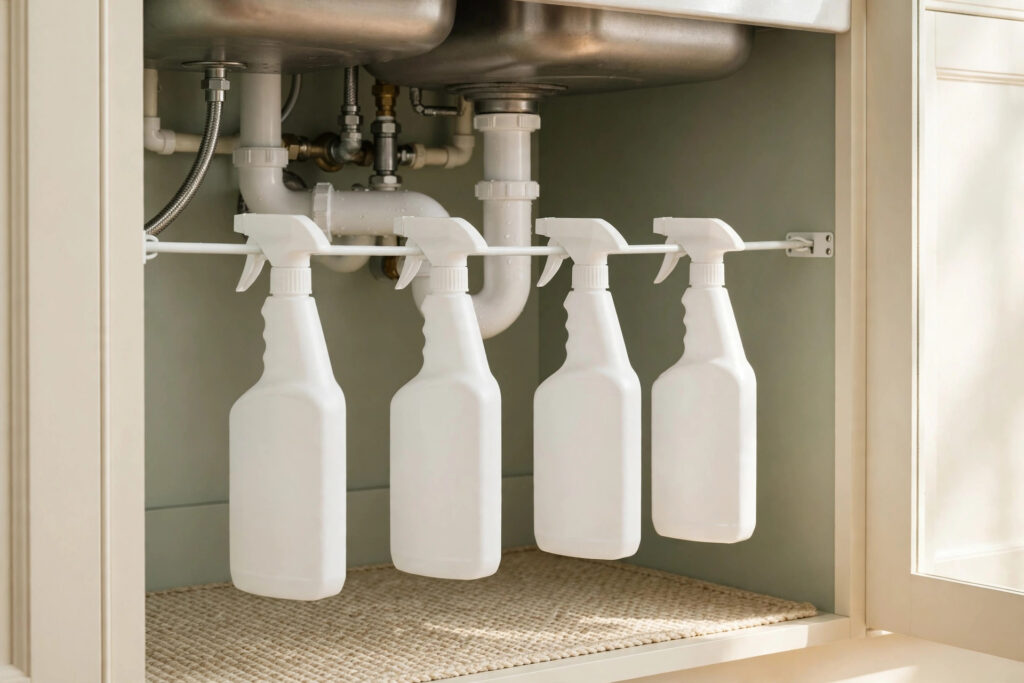
A short tension rod stretched across a cabinet interior makes an instant rail: hang spray bottles by their triggers under the sink, or stretch one vertically as a divider to keep baking trays and chopping boards upright instead of stacked in a landslide. Upright storage is the single biggest space win in most small cabinets.
3. Stackable shelf risers
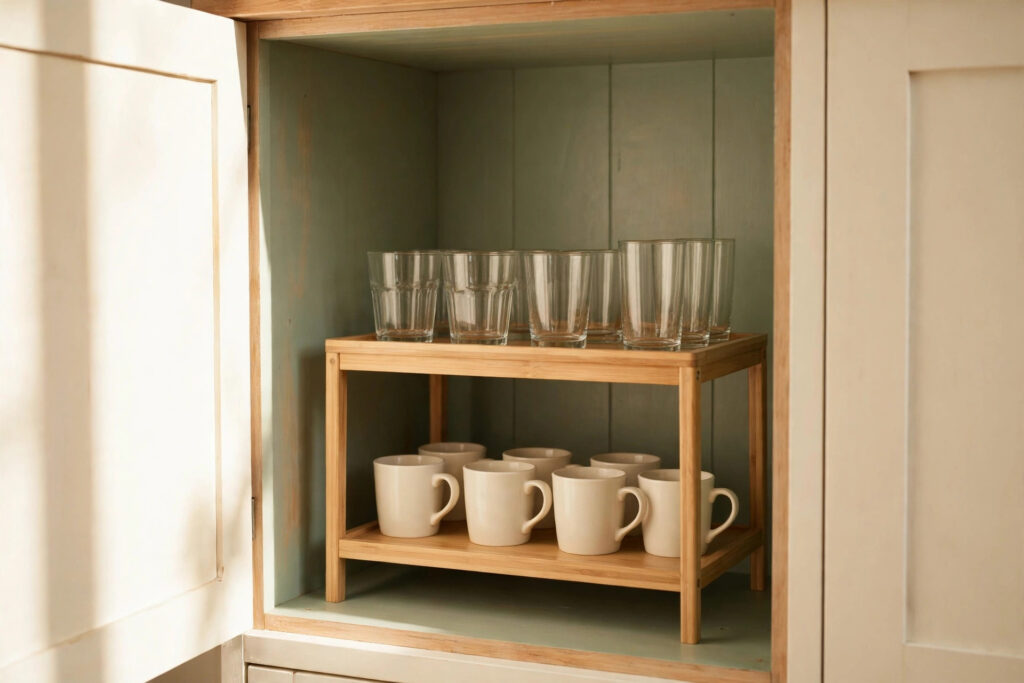
A freestanding riser shelf doubles a cabinet shelf for tins, mugs and glasses. Two rules: measure the riser legs against the shelf height (a riser that leaves 2 inches of headroom wastes both levels), and put heavy items on the cabinet shelf itself, light ones on top.
4. Turntables — only in the right spot
A turntable earns its place in a deep corner cabinet or a fridge, where items get lost at the back. On a shallow shelf it wastes the corners and spins your spices onto the floor. Deep and cornered: yes. Shallow and straight: use a tray instead.
5. Trays and low bins as “drawers”
In cabinets without drawers, a low tray or bin you pull toward you does the same job. Group by task — oils and vinegars on one tray, baking bits in one bin — and the whole group slides out, wipes clean, slides back. This is the same tray principle as the cooking zone in our 7-zone pantry system, applied to cabinets.
6. Over-the-sink and countertop racks
A dish rack that straddles the sink, or a slim two-tier counter rack in the dead corner, adds a level without touching anything. Measure the counter-to-uppers clearance first (above), and be honest about counter space: in a tiny kitchen, vertical racks can crowd your only prep surface. If you prep on 2 feet of counter, protect it.
7. Magnetic storage on the fridge
If the fridge side or front is magnetic, a magnetic spice rack or paper-towel holder moves small items off the counter entirely. Test with a magnet first — stainless-look panels are often not magnetic. Buy magnetic strength by the heaviest jar you actually use, and keep magnets away from anything you would not want sliding down at midnight: start light.
8. Rolling cart between appliances
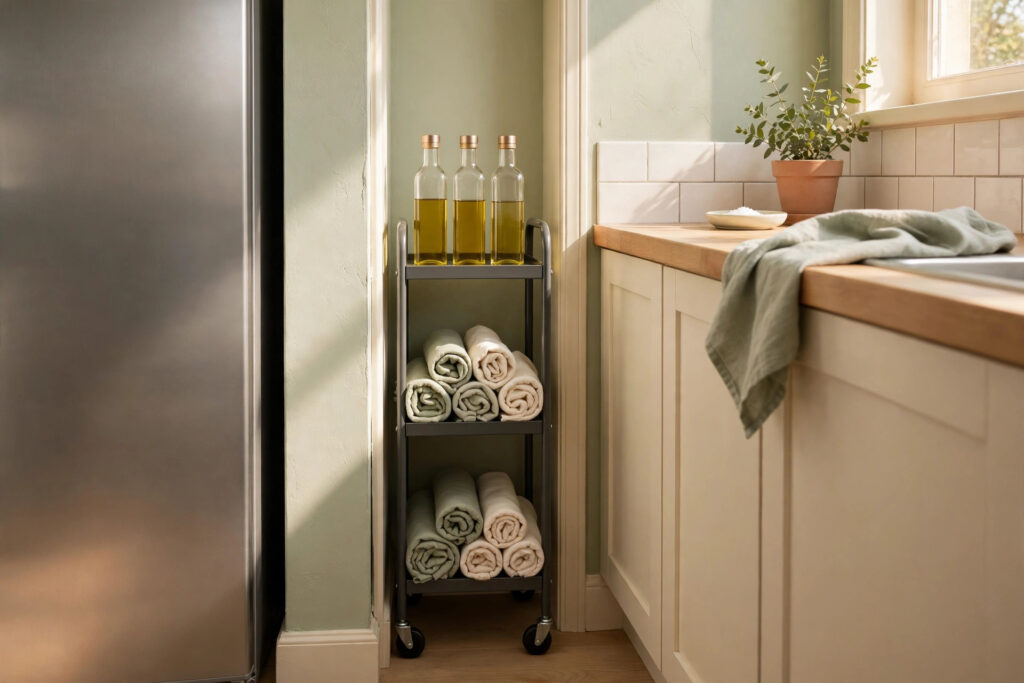
The 4–8 inch (10–20 cm) gap beside a fridge or oven fits a slim rolling cart for oils, wraps and cleaning cloths. It rolls out for use and disappears the rest of the day. Measure the gap at its narrowest point (baseboards steal space at the bottom) before ordering.
9. Over-cabinet-door towel and bin hooks
Hooks that drop over a cabinet door hold a hand towel outside or a small caddy inside for sponges and brushes. Same clearance rule as idea 1: test the close before committing.
10. Adhesive hooks — with a warning label
Adhesive products on tile or glass splashbacks can work well and usually remove cleanly. On painted walls, cabinet paint or wallpaper, removal can take the finish with it — that is deposit money. Our honest rule: adhesive on tile/glass/fridge only, never on paint, and always the removable-strip kind. If in doubt, hang it from something instead.
The move-out reversal (your deposit checklist)
Everything in this guide comes out in one afternoon: lift off door hooks, slide out tension rods (twist, do not wrench), roll carts out, peel removable strips slowly downward against the surface. Wipe adhesive ghost-marks with a damp cloth before inspection, and take dated photos of each cabinet empty and clean — the same photos you took on move-in day are your best deposit protection.
What to skip
- “Peel-and-stick” shelf brackets and floating shelves on paint. They hold — right up until they don’t, and the repair bill is yours.
- Over-door racks on the kitchen door itself if the door opens onto a walkway; swinging storage meets faces.
- Buying a full matching set before measuring. Rental cabinets vary wildly between flats in the same building.
- Magnetic knife strips stuck to the wall — adhesive plus heavy sharp objects is a combination to admire in other people’s kitchens.
Keep it tidy
Weekly: pull each tray out, wipe under it, return escapees to their group. Kitchen systems fail by migration, not by design — a 5-minute weekly reset keeps every group where it belongs.
FAQ
Will my landlord count adhesive hooks as damage?
It depends on the surface and the lease — hooks on tile usually remove cleanly; anything that pulls paint off is damage in most inventories. When the lease is strict, stick to the hanging/tension/freestanding methods in this guide, which leave nothing behind at all.
What’s the single best first buy for a rental kitchen?
A low tray or bin that turns your deepest cabinet into a pull-out “drawer” (idea 5). It is cheap, fits almost any cabinet, and works under sinks, in pantries and in bathroom cabinets too.
Can I hang things from the upper cabinets themselves?
Hanging rails that clamp under upper cabinets exist, but they can mark cabinet undersides and swing when you grab items. In a rental, prefer cabinet-door and countertop methods — the mark risk is not worth the convenience.
How do I store pan lids without a rack screwed in?
A tension rod run vertically in a deep drawer or cabinet makes an upright lid file (idea 2), or stand lids in a large file-style box. Anything upright beats the stacked-pile dig.
Get the printable
Rental Kitchen Deposit-Safe Checklist
One page: the measurements above, the move-in/move-out photo checklist, and the surface rules for adhesive.


3 thoughts on “Rental Kitchen Storage Without Drilling or Losing Your Deposit”