
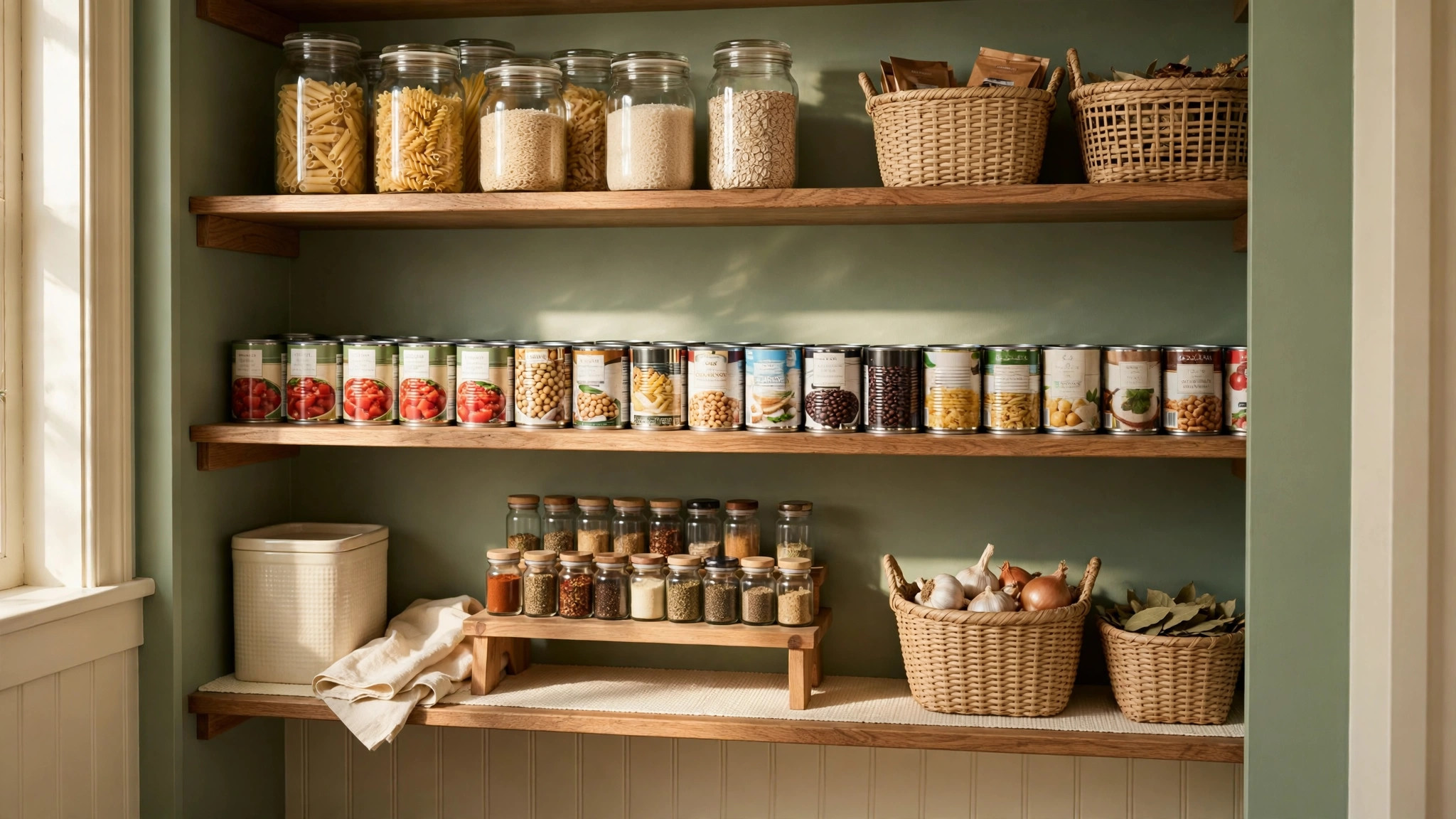
Small Pantry Restock System: The 15-Minute Weekly Reset That Stops the Overflow
The shop itself isn’t the problem. It’s the twenty minutes after you get home: bags on the counter, new tins pushed in front of old ones, a second packet of rice opened while the first sits half-used at the back. A small pantry doesn’t fail because it’s small. It fails at restock time, when new food lands on top of a system that was never reset.
This is the fix we recommend instead of another sort-out: a 15-minute restock routine you run once a week, on shopping day, before the new food goes in. Four passes, in order. It works in a one-cupboard pantry too — the passes just get smaller.
Why restock day is where small pantries break
Three things go wrong in the same ten minutes. First, there’s no empty landing space, so bags pile onto the worktop and stay there. Second, new items go at the front because that’s the easy reach, which buries older stock until it’s out of date. Third, nobody writes down what’s actually running low, so the next shop duplicates what’s already there and misses what isn’t. The reset attacks all three, in that order.
Pass 1 — Clear the landing strip (about 2 minutes)
Pick one stretch of counter — ideally right beside the pantry — and clear it completely. This is where every bag lands, every week, no exceptions. Nothing lives on the landing strip permanently: not the fruit bowl, not the post. If your kitchen has almost no counter, a chair or a clear section of table works; our rental kitchen storage guide covers no-drill ways to free up a work surface first. The point of the strip is that unloading takes two minutes instead of becoming a slow spread across the whole kitchen.
Pass 2 — Out before in (about 3 minutes)
Before anything new goes on a shelf, take out what shouldn’t be there. Check dates on the front row, combine half-used duplicates into one container, and move anything expired or stale to a bag by the door. This is not a deep clean — it’s a three-minute honesty check on the shelf you’re about to refill. Back-stock you’d forgotten often turns up here, which is exactly why it comes before the new shop goes in.
Pass 3 — Refill front, store high (about 5 minutes)

Now load the shop. Everyday items go at the front, at the height you reach without thinking. The extras — the second tin, the spare packet — go behind them or on the highest shelf, together in one place. That single habit, buy front, store high, quietly rotates your stock: you finish what’s open before you touch the spare, and the spare is visible when you need it. In a one-cupboard pantry, “high” just means the back of the shelf; the rule still works. Group as you go — tins with tins, packets with packets — but don’t reorganise the whole pantry. You’re restocking, not renovating.
Pass 4 — The door list (about 2 minutes)

Stick a short list inside the pantry or cupboard door, at eye level. Every time you finish something or notice you’re down to the last one, it goes on the list. On shopping day, the list becomes your shop — which stops both failure modes: buying a third packet of something you have, and forgetting the one thing you don’t. Paper beats an app here for most households because the list lives where the food does. (If paper clutter is your wider problem, the home paper system pairs well with this.)
The whole routine on one line
| Pass | Job | Time |
| 1 | Clear the landing strip | ~2 min |
| 2 | Out before in (dates, duplicates) | ~3 min |
| 3 | Refill front, store high | ~5 min |
| 4 | Update the door list | ~2 min |
That’s twelve minutes of moving and two of listing — under fifteen with practice, because passes 1 and 4 become automatic. Pair it with the weekly shop, the same pairing logic as a short evening tidy: our 10-minute nightly reset does for the whole home at night what this does for the pantry on shopping day.
Three mistakes that keep the overflow coming back
Buying containers before the habit. New boxes on a broken routine just organise the chaos more neatly. Run the reset for three or four shops first; then buy only what the routine proves you need.
Storing back-stock at the front. The spare packet at eye level gets opened first, and now you have two open packets ageing together. Front is for what you’re using this week.
Skipping pass 2 “just this once.” That’s the week two shops collide and the overflow returns. Pass 2 is the whole system in miniature — protect it.
If you don’t have a pantry
One cupboard shelf follows the same four passes: clear one landing spot, check the shelf before loading, everyday items at the front edge, spares behind, list inside the door. The system scales down better than it scales up, which is good news for small homes.
Your first run
Do the first reset on your next shopping day and time it loosely — most people find the second run noticeably faster, because the landing strip and door list are already in place. Then just keep the pairing: shop comes home, reset runs, list starts again. Nothing about this needs a bigger pantry. It needs the fifteen minutes the overflow was costing you anyway.


3 thoughts on “Small Pantry Restock System: The 15-Minute Weekly Reset That Stops the Overflow”