

A capsule wardrobe is supposed to make a small closet easier. Somehow it often does the opposite: the current season hangs in the closet while the off-season colonises the floor, the top of the wardrobe and a chair that no longer functions as a chair. The wardrobe isn’t the problem. The rotation is missing.
You don’t need a bigger closet or a stricter capsule. You need a swap system: two containers, one honest sort, and a rail with room to breathe. Here’s the version that works in rented, small-closet homes.

First, measure the closet you actually have
Before anything moves, take three quick measurements: the length of the hanging rail, the depth and height of the highest shelf, and the floor footprint. Write them on a note in your phone — they decide what storage can even enter the room, which is the same measure-first logic behind our closet organization on a budget guide. Off-season storage that doesn’t fit the highest shelf or the under-bed space will end up on the floor no matter how good your intentions are.
The two-container rotation
Keep off-season clothes in just two containers, sized to the spaces you measured:
- Container one (the shelf box): lives on the highest closet shelf or top of the wardrobe. Holds the bulk of the off-season — jumpers in winter’s case, light dresses in summer’s.
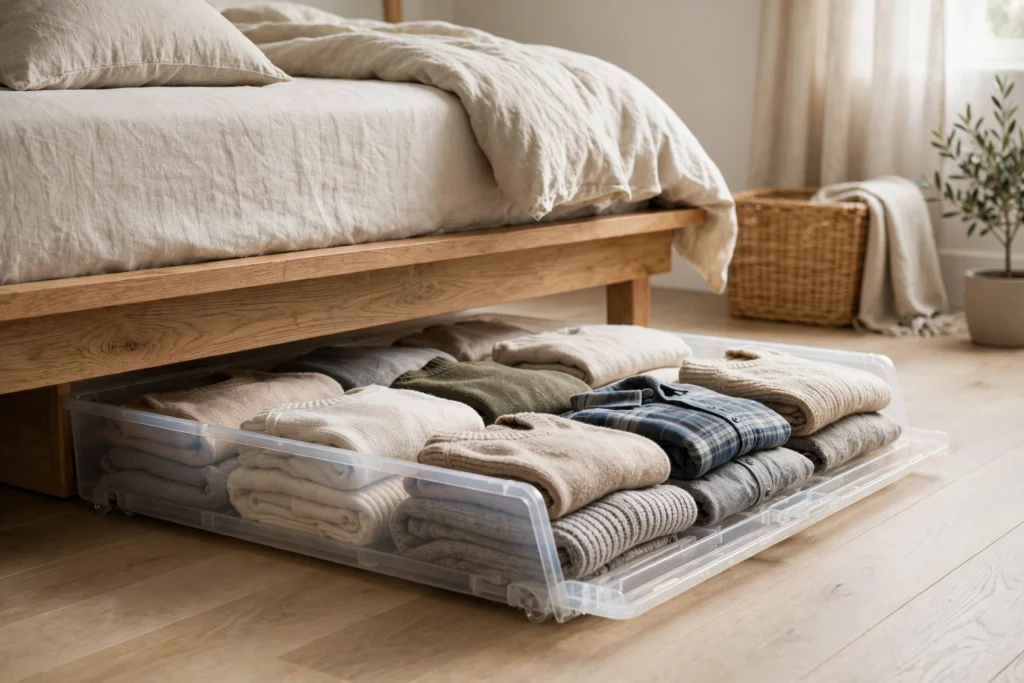
- Container two (the flat box): slides under the bed or behind the sofa. Holds the overflow and the in-between items — the layers you reach for during changeable weeks.
Two is the discipline. A third container is a sign the wardrobe itself needs a sort, not more storage. Everything off-season must fit these two, or it’s a candidate to let go.
The swap afternoon (about an hour)
Twice a year, when the weather genuinely turns:
- Empty the rail completely. Yes, all of it — the swap fails when you sort around what’s hanging.
- Sort into four piles: this-season keep, off-season store, repair/wash first, let go. Be honest about the “let go” pile; clothes stored for two swaps unworn have already told you something.
- Wash or air anything going into storage. Storing worn clothes is how musty smells and fabric damage happen; clean, fully dry items store best.
- Pack container one (shelf), then container two (flat). Heaviest items at the bottom of the shelf box so it lifts safely.
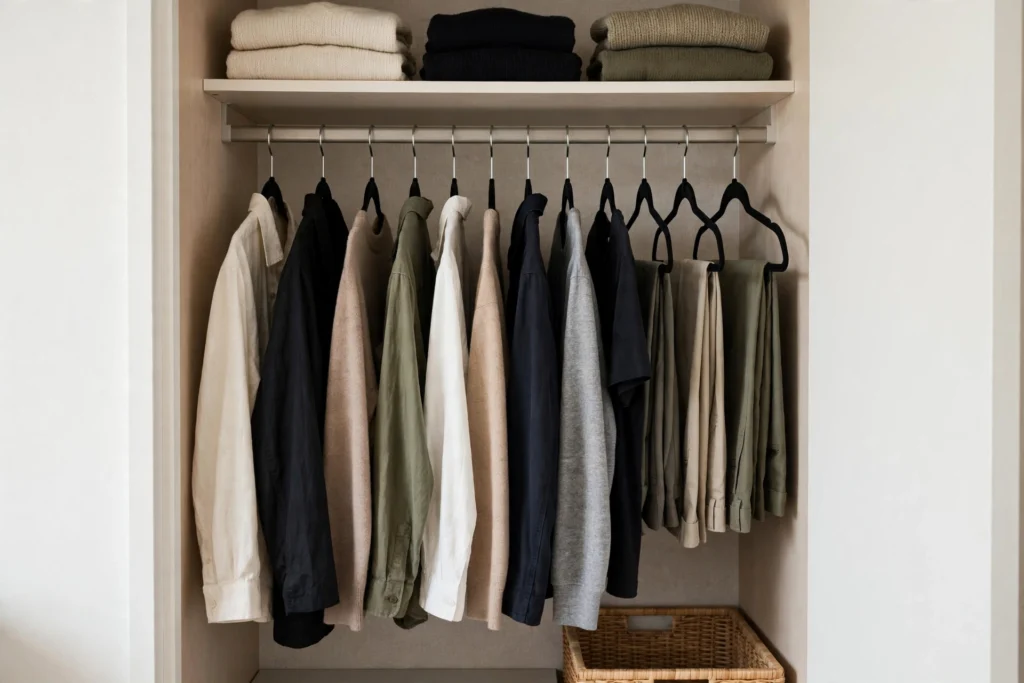
- Hang the new season with breathing room. If you can’t slide hangers along the rail, the capsule is too big for the closet — edit once more.
- Photograph the packed containers’ contents (one phone photo each) and save it. Next swap, you’ll know exactly what’s stored without opening anything.
Make the in-season rail work harder
Group what’s hanging by how you get dressed — work, home, going out — rather than by colour or garment type, and getting dressed gets faster. Keep one small section at the rail’s end for the week’s planned outfits if your mornings are rushed. If your closet has no door or a dead corner going spare, the no-drill ideas in No-Drill Closet Storage add hanging and shelf space without touching the walls — renters included.
The mistakes that bring the boxes back
Storing dirty or damp clothes. The fastest route to a musty box and ruined favourites. Clean and fully dry, every time.
Vacuum-bagging everything. Compression bags are fine for bulky, sturdy items, but delicate fabrics and anything with structure can come out creased or misshapen. Use them selectively, not as the default.
No record of what’s stored. Without the photo list, the off-season becomes a mystery box you buy duplicates to avoid opening.
Letting the swap become a shop. New-season excitement is real; the rail-space test (can hangers slide?) is your honest limit.
Swap-day checklist
- Closet measured (rail, top shelf, under-bed) and saved in phone
- Rail emptied fully
- Four-pile sort done (keep / store / wash-repair / let go)
- Stored clothes clean and fully dry
- Two containers packed — shelf box first, flat box second
- New season hung with sliding room on the rail
- Contents photographed for next swap
Run this twice a year and the capsule stays what it was meant to be: a short rail of clothes you actually wear, in a closet that closes.


2 thoughts on “Capsule Wardrobe, Small Closet: A Season-Rotation System Without Boxes Everywhere”