
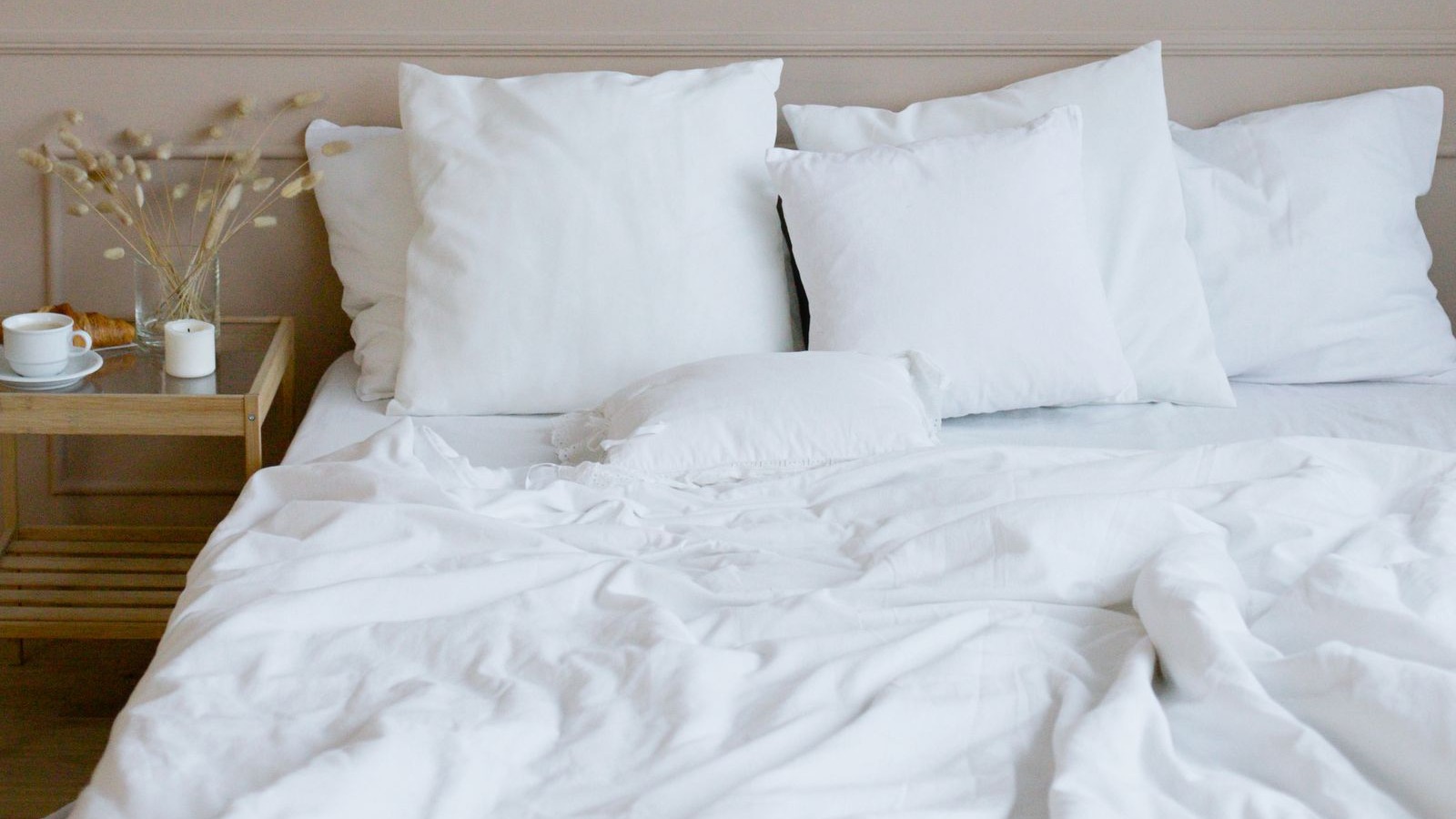
Your pillowcase gets washed every week, but the pillow inside it is easy to forget — until it turns yellow, starts to smell, or goes flat in the middle.
Learning how to wash pillows properly takes about ten minutes. The hard part is knowing which method fits your pillow: the wrong one can tear foam, clump down or leave the middle damp for days. This guide covers every fill type, step by step, for small machines, shared laundry rooms, and drying without a big dryer or a garden.
Key Takeaways
- How to wash pillows, in short: match the method to the fill, wash two at a time, dry the middle fully.
- Most pillows need washing every 3–6 months; pillowcases weekly, and a zippered protector stretches the time between full washes.
- Down, feather and polyester pillows usually go in the machine on gentle, with a little mild detergent and an extra rinse.
- Never machine-wash solid memory foam or latex — spot-clean by hand, air-dry flat.
- Drying matters more than washing: a pillow that feels dry outside can still be damp in the middle, and a damp core grows mildew.
Read the Care Label First
Find the care label sewn into the pillow’s seam before anything goes near water — it beats every guide, including this one. Machine washable means the machine steps below are fine. Spot clean only, hand wash only or dry clean only means follow the label.
Which Pillows Can Go in the Washing Machine?
The fill decides how to wash pillows — find yours here.
| Fill type | Machine wash? | Best method | Drying |
|---|---|---|---|
| Down / feather | Yes, usually | Gentle cycle, warm water, extra rinse | Tumble dry low + dryer balls |
| Polyester / hollowfibre | Yes | Gentle cycle, warm water | Tumble dry low–medium |
| Memory foam | No | Spot clean only; wash cover if removable | Air dry flat, away from heat |
| Latex | No | Spot clean or hand wash | Air dry flat, no sun |
| Buckwheat | No (hulls) | Wash cover only; air hulls | Air dry cover; air hulls in sun |
| Throw pillow | Cover: wash per label | Spot clean insert; gentle if label allows | Air dry, or tumble low |
How to Wash Pillows in a Washing Machine

This is the method most people mean when they ask how to wash pillows: down, feather and polyester in the machine. It works in a front loader and in a top loader on gentle. A tall centre agitator is rougher on fills — use gentle, or hand wash instead.
- Remove the case and the protector. Wash those separately with your sheets.
- Wash two pillows at once. One alone throws the drum off balance.
- Use a small amount of mild liquid detergent. About half the normal dose is enough — too much leaves residue that holds smells.
- Choose a gentle cycle with warm water. It cleans better and helps with dust mites.
- Run an extra rinse. Thick fill holds soap.
- Skip fabric softener. It coats the fill and traps moisture.
How to Wash Pillows by Hand
Hand washing is the right answer to how to wash pillows when the label says hand wash only, the fill is foam or latex, or you have a very small machine or a shared laundry room.
- Fill a clean bathtub or large sink with lukewarm water and a little mild detergent.
- Submerge the pillow and press it gently so the water moves through the fill.
- Drain, refill with clean water, and press and rinse until the water runs clear.
- Roll the pillow in a big dry towel and lean on it to press the water out. Never twist it.
- Lay it flat on a drying rack or a clean towel, in a spot with good airflow, turning it every few hours.
How to Wash Down Pillows
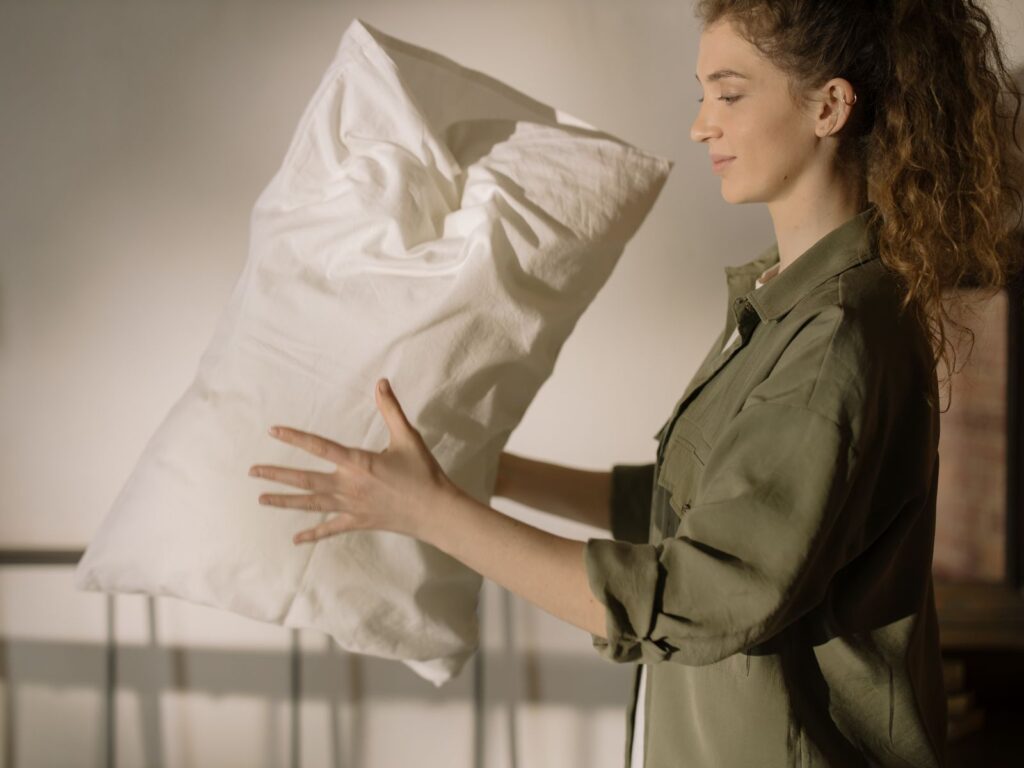
When it comes to how to wash down pillows, the wash is easy — use the machine steps above, then focus on drying:
- Check for leaks first. Hold it up to the light and look for feathers poking through. If the cover is torn, wash it inside a pillowcase tied shut.
- Dry on low heat with dryer balls. Down clumps when it dries, and clumped down stays damp inside. Tumble dry on low with two or three clean tennis balls or wool dryer balls (put tennis balls in clean white socks first, so they cannot transfer colour). Expect two to three hours on low for a thick pillow; stop every 30 minutes to fluff it. It is done only when the centre feels dry and springy.
How to Wash Memory Foam Pillows
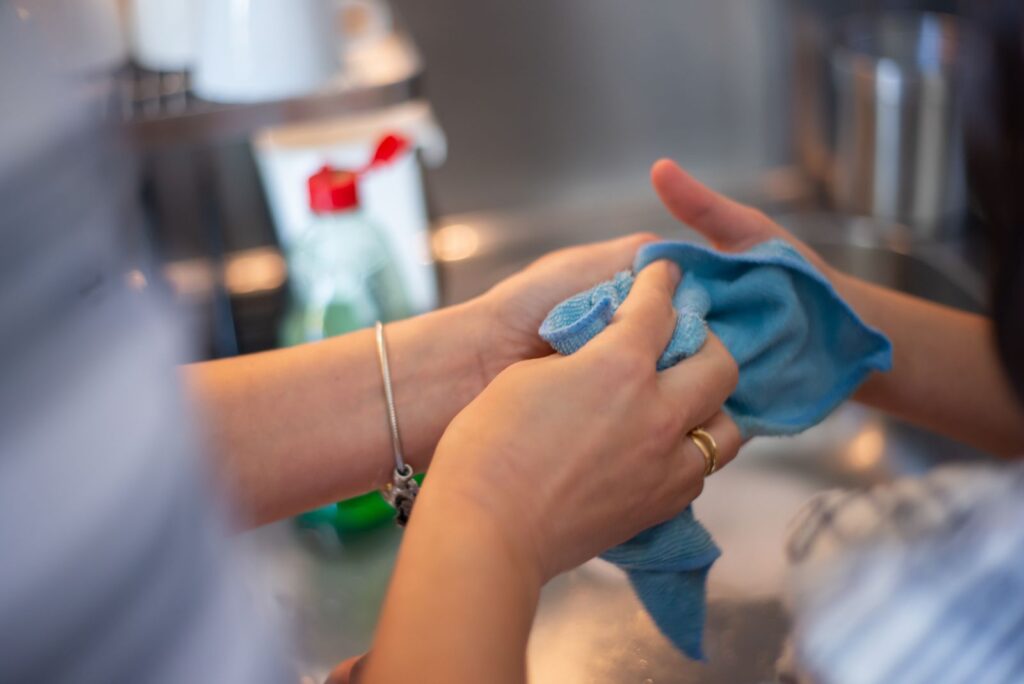
The first rule of how to wash pillows made of foam is simple: never machine-wash them. Agitation breaks the foam’s cell structure apart, and heat does the same damage, so the dryer is out too.
- Remove the cover and wash it on its own. Most memory foam pillows have a removable, machine-washable cover; wash it on cold gentle.
- Vacuum the foam with the upholstery attachment.
- Spot clean stains. Dampen a clean cloth with cool water and a drop of mild dish soap, then blot — do not rub or soak.
- Deodorise with baking soda. Sprinkle a thin layer, leave 30 minutes, then vacuum it off.
- Air dry flat on a rack with a fan nearby; a thick foam pillow can take a full day.
The same rules apply to shredded memory foam: some covers are machine washable on their own, but the foam itself is always spot clean only.
How to Wash Throw Pillows
The question of how to wash throw pillows is really two questions: a throw pillow is a cover and an insert, and each gets washed differently.
- If the cover comes off, unzip it and wash it by itself, following its own care label. Most cotton and polyester covers go in the machine on gentle. Spot clean the insert, then air dry it.
- If the cover does not come off, check the label: many throw pillows are machine washable on gentle (wash two at a time). If it says spot clean only, use a damp cloth with mild soap and white vinegar, then air dry flat.
How to Dry Pillows
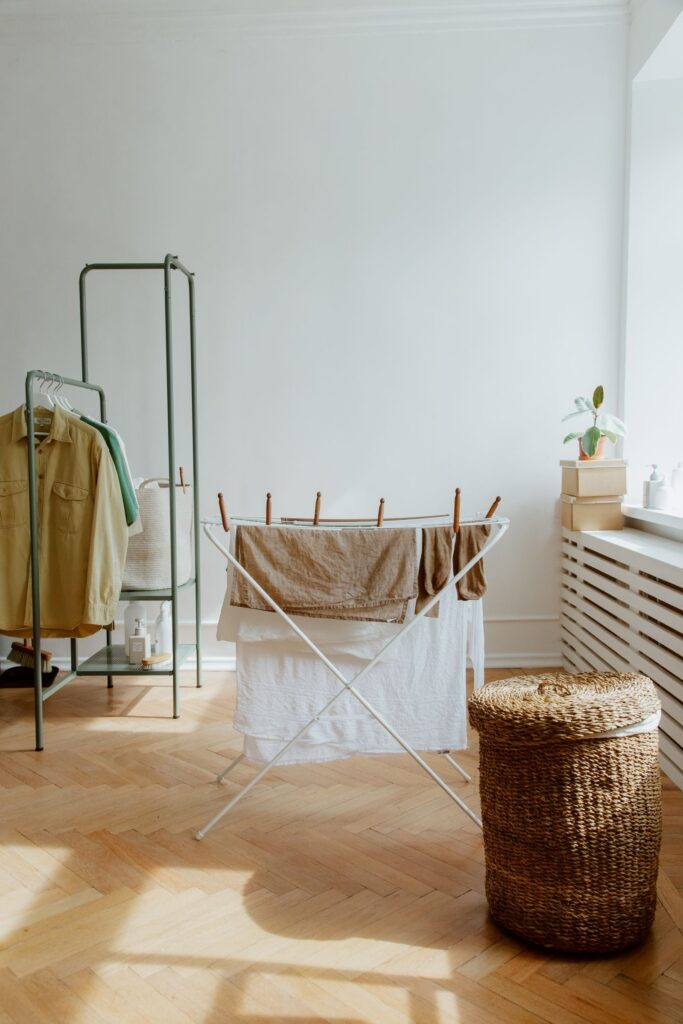
Knowing how to wash pillows is only half the job — drying decides whether it worked. A pillow that feels dry outside and is still damp in the middle will smell musty within days, and a damp core is where mildew grows.
In a dryer (best for down and polyester): Use low heat for down, low–medium for polyester, with two or three dryer balls or tennis balls in white socks. Expect 1–2 hours for polyester, 2–3 for down; check and fluff every 30 minutes. It is done when the middle feels dry and springy.
Without a dryer (small flats, shared laundry rooms): Lay it flat on a drying rack or clean towel, on its edge so air reaches both sides, turning it every few hours. Put a fan on it, near a sunny window if you can. Air drying takes 12–24 hours for polyester, longer for down — start in the morning. Never lay a wet pillow on a bed or carpet. For more ideas, see our small-space storage guide.
The dryness test: Press your hand hard into the middle for ten seconds. If it comes away cool, or the fill feels heavy and slow to spring back, it is still damp — keep drying.
How Often Should You Wash Pillows?
If you are wondering how to wash pillows on a schedule that actually sticks, tie it to the seasons: every 3–6 months is the right range for most households.
- Every 3 months if anyone has allergies, sleeps hot, or shares the bed with a pet.
- Every 6 months if you use a zippered protector and wash it often.
- Pillowcases: weekly, with the sheets. A protector: as often as its label allows.
- Guest pillows: wash before guests arrive and after they leave.
How to Fix Yellow, Smelly or Lumpy Pillows
Yellowing. Yellow stains are the most common reason people look up how to wash pillows — sweat and body oils soaking into the fill over time. A soak helps: warm water with half a cup of baking soda and half a cup of white vinegar, 30 minutes before washing as normal. Old stains rarely come out completely; a pillow protector prevents the next round.
Smell. A pillow that smells musty after washing was not dried fully — run it through the dryer again, or give it another full day of air drying. If the smell survives a full wash and a full dry, the fill has gone bad and the pillow needs replacing.
Lumps and clumps. Clumping is fill that stuck together while it dried. Break it up by hand, then tumble dry on low with dryer balls for 20–30 minutes.
4 Mistakes That Ruin Pillows
Every one of these is easy to avoid once you know how to wash pillows the right way.
- Machine-washing memory foam. Agitation tears the foam apart.
- Washing one pillow alone. The drum goes off balance and the pillow comes out sopping. Always wash two.
- Stopping the dryer too early. The outside feels dry long before the middle does.
- Using fabric softener. It coats the fill, flattens the loft and traps moisture.
When to Replace a Pillow
Knowing how to wash pillows extends a pillow’s life, but it does not make it last forever. Replace a pillow that stays lumpy, flat or yellow after a proper wash and a full dry; that fails the fold test (fold it in half, let go, and it does not spring back); or that still smells musty after washing and drying it fully. When a pillow goes, follow the one-in, one-out rule: a new one comes in, the old one goes out.
Frequently Asked Questions
How to wash pillows in a washing machine?
Remove the case and protector, then wash two pillows at a time on gentle with warm water and a little mild liquid detergent. Add an extra rinse, skip the fabric softener, and tumble dry low with dryer balls until the centre is fully dry.
Can you wash memory foam pillows?
No, never machine-wash solid memory foam — the agitation breaks the foam’s structure and the pillow loses its support permanently. Machine-wash the cover on its own, spot clean the foam with a damp cloth and mild soap, and air dry flat.
How often should you wash pillows?
Wash pillows every 3–6 months — every 3 months if anyone has allergies, sleeps hot, or shares the bed with a pet. Wash pillowcases weekly with the sheets, and wash a zippered pillow protector as often as its label allows.
How do you dry pillows without a dryer?
Lay it flat on a drying rack near a sunny window with a fan on it, turning it every few hours. Allow 12–24 hours for polyester and longer for down, and use the hand-press test: if the middle feels cool or heavy, it is still damp.
Why do pillows turn yellow?
Sweat and body oils soak into the fill over time, and the yellow is the stain they leave behind. A soak in warm water with baking soda and white vinegar can lighten it. A washable pillow protector is the best prevention.
Can I wash pillows in a top loader with an agitator?
You can, but use the gentle cycle and wash two pillows at a time. A tall centre agitator is rougher on fills than a front loader, so consider hand washing first, or using a front-loading machine at a laundromat instead.
The Short Version
Learning how to wash pillows comes down to three rules: check the label, match the method to the fill, and dry the pillow all the way through. Down and polyester go in the machine on gentle, two at a time, with an extra rinse; memory foam and latex never go in the machine. Once you know how to wash pillows by fill type, the job stops being a gamble.
Put a washable pillow protector on every pillow you own, and most of this becomes a twice-a-year job. If your bedroom needs a wider reset, the free 10-Minute Nightly Reset Checklist covers the same kind of small nightly loop.
Browse the Printable Library for more free checklists and printables.


